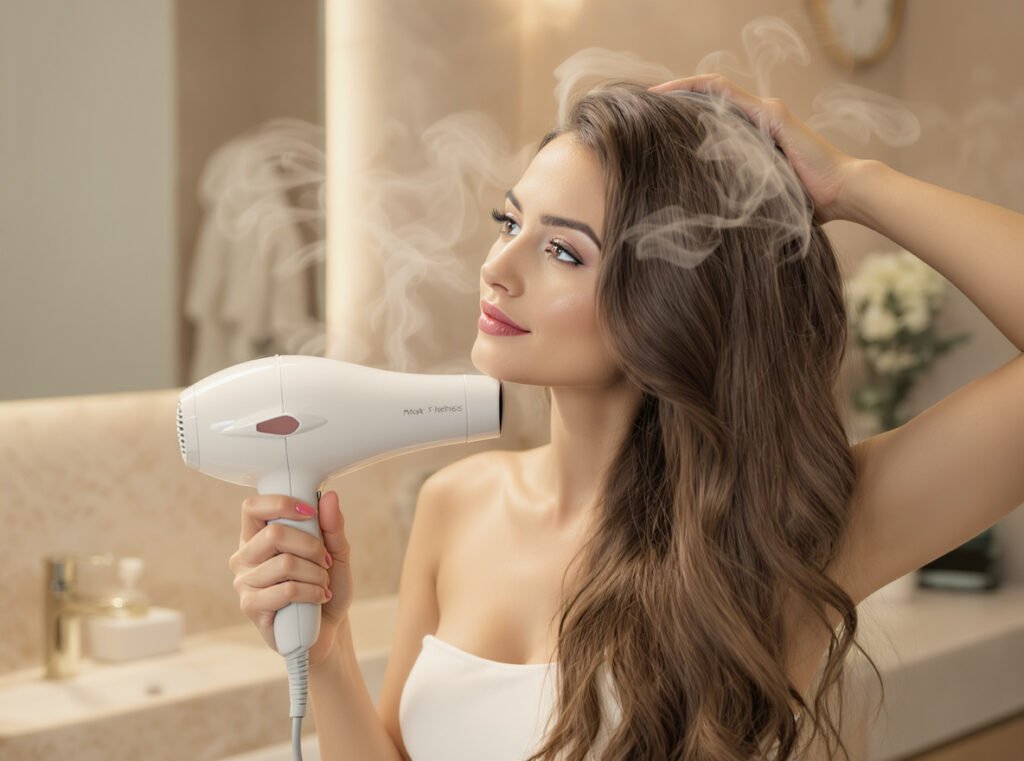
Do you experience discomfort, irritation, or flaking when blow-drying your hair? Sensitive scalps require special care during styling routines. Without proper technique, heat styling can worsen scalp issues and lead to long-term damage.
The best blow-drying method for sensitive scalps involves using low heat settings (under 140°F), maintaining at least 6 inches distance from your scalp, applying heat protectant products, and limiting drying time through pre-towel drying. Consider ionic hair dryers with multiple temperature controls for optimal scalp comfort.
Let’s explore the complete guide to protecting your sensitive scalp while achieving beautiful, salon-quality results.
Why Does My Scalp Feel Sensitive When Blow-Drying?
Understanding scalp sensitivity helps you choose the right drying approach and avoid common triggers.
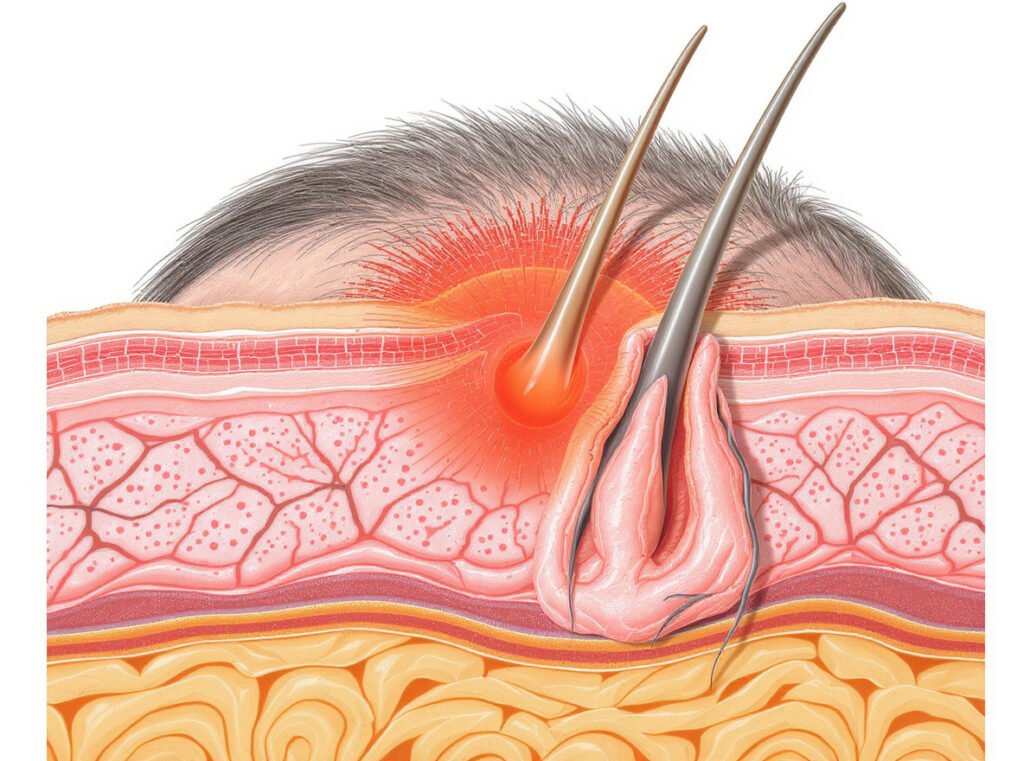
Scalp sensitivity during blow-drying occurs due to excessive heat exposure, dehydration of skin cells, disruption of natural oil production, and inflammation from high temperatures. Hair dryers operating above 140°F can damage scalp tissue and worsen existing conditions like dermatitis or dryness.
Common Causes of Scalp Sensitivity
Several factors contribute to scalp discomfort during heat styling:
Heat Damage: With maximum heat, it can reach an extreme temperature like 140 degrees, which is enough to bake not only your hair but also the skin on your scalp. This excessive heat strips natural moisture and causes irritation.
Moisture Loss: Hot air removes essential hydration from scalp skin, leading to dryness, flaking, and tightness. The scalp’s protective barrier weakens when exposed to prolonged heat.
Product Buildup: Styling products combined with heat can create residue that clogs pores and irritates sensitive skin. This buildup traps bacteria and can worsen scalp conditions.
| Sensitivity Trigger | Effect on Scalp | Prevention Method |
|---|---|---|
| Excessive Heat | Inflammation, burning | Use low temperature settings |
| Long Exposure Time | Dehydration, flaking | Pre-dry with towel, reduce styling time |
| Wrong Distance | Direct heat damage | Keep 6+ inches away from scalp |
| Chemical Products | Allergic reactions | Choose gentle, natural formulations |
What Temperature Should I Use for Sensitive Scalps?
Temperature control is crucial for preventing scalp irritation and maintaining healthy hair follicles.
For sensitive scalps, use temperatures between 80-140°F (low to medium heat settings). The rule of thumb is: if the flow of air is too hot to be comfortable on your hand, it’s too hot for your head. Modern ionic hair dryers offer precise temperature control for optimal comfort.
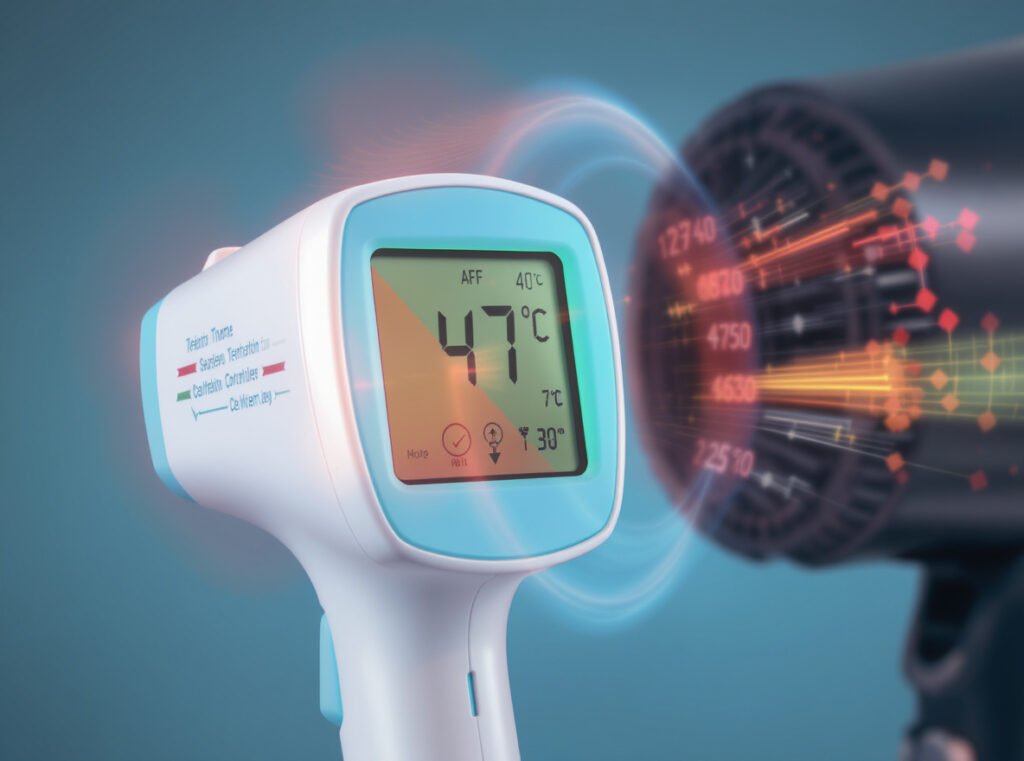
Temperature Guidelines by Hair Type
Different hair textures require specific temperature ranges for safe drying:
Fine Hair: Use the lowest setting (80-100°F) as fine strands heat quickly and are more susceptible to damage. The delicate scalp underneath needs gentle treatment.
Medium Hair: Medium heat (100-120°F) works well for most people with normal hair thickness. This range provides efficient drying without excessive heat exposure.
Thick Hair: Maximum safe temperature (120-140°F) may be necessary for dense hair, but always start lower and increase gradually if needed.
- Test temperature on your wrist before directing airflow toward your scalp
- Begin with the coolest setting and increase only if drying takes too long
- Use cool shot feature to seal hair cuticles and soothe scalp at the end
- Consider ionic technology that dries hair faster at lower temperatures
How Far Should I Hold My Hair Dryer from My Scalp?
Proper distance prevents concentrated heat damage while ensuring effective drying results.
Make sure to hold your device at least 20 centimeters away from your scalp (approximately 8 inches). For sensitive scalps, maintain 6-10 inches distance minimum. Use your dryer on a medium setting, holding it 6 inches away to minimize heat exposure.
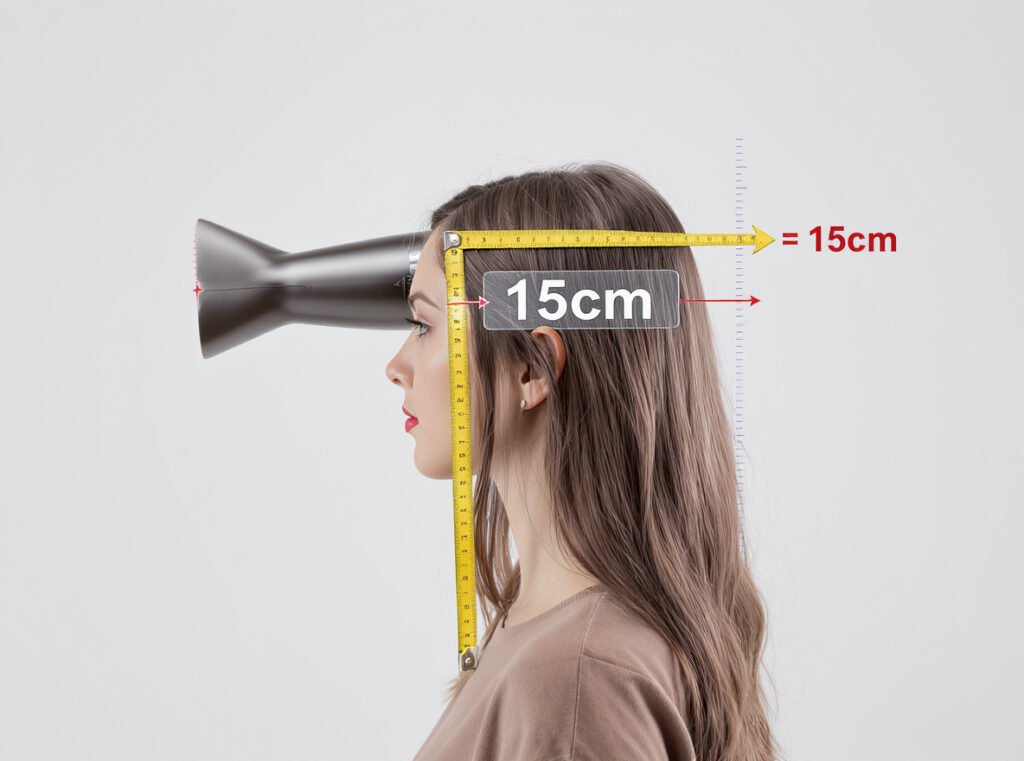
Distance Techniques for Different Hair Sections
Strategic positioning ensures even drying without scalp irritation:
Root Areas: Keep 8-10 inches away from the scalp when drying roots. Move the dryer constantly to prevent heat concentration in one area.
Mid-Length and Ends: You can work closer (4-6 inches) on hair lengths since they’re further from sensitive scalp skin.
Crown Section: This area is most sensitive to heat. Use maximum distance and cooler temperatures when working on the top of your head.
The Conason P1C ionic hair dryer features adjustable airflow settings that allow you to maintain proper distance while still achieving fast, effective drying. Its negative ion technology reduces drying time, meaning less heat exposure for your sensitive scalp.
Should I Use Heat Protectant Products on My Scalp?
Heat protection creates a barrier between your scalp and hot styling tools.
Always apply heat protectant to hair strands, but avoid direct scalp application with most commercial products. Always use a heat protection spray, but do not apply it to the scalp. Instead, choose scalp-specific thermal protection serums or natural oils like argan oil for sensitive skin.
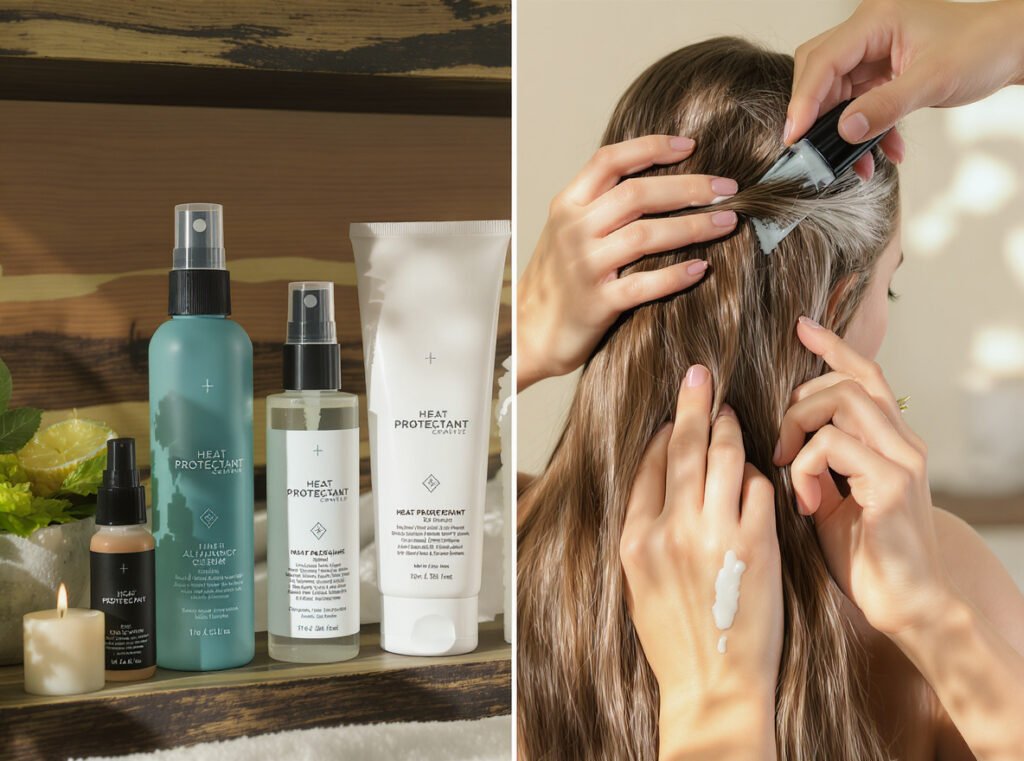
Choosing the Right Protection Products
Select products formulated specifically for sensitive scalps:
Lightweight Serums: These absorb quickly without leaving residue that could clog pores or cause irritation. Look for silicone-free formulations.
Natural Oils: Argan, jojoba, or coconut oil provide natural heat protection while nourishing the scalp. Apply sparingly to avoid greasy buildup.
Scalp-Safe Sprays: Some brands offer heat protectants specifically designed for scalp application. These contain gentle ingredients suitable for sensitive skin.
| Product Type | Best For | Application Method | Key Benefits |
|---|---|---|---|
| Lightweight Serum | Daily use | Apply to damp hair only | Non-comedogenic, fast absorption |
| Natural Oils | Weekly treatments | Small amount to scalp and hair | Moisturizing, chemical-free |
| Scalp Sprays | Sensitive conditions | Light mist over entire head | Cooling effect, anti-inflammatory |
What’s the Best Pre-Drying Routine for Sensitive Scalps?
Preparation significantly reduces heat exposure time and minimizes scalp stress.
Before blow drying, remove excess water with a towel, to shorten time using the dryer. Gently squeeze hair with a microfiber towel, apply leave-in treatments, and allow 5-10 minutes of air drying before using heat tools. This reduces blow-drying time by 40-50%.
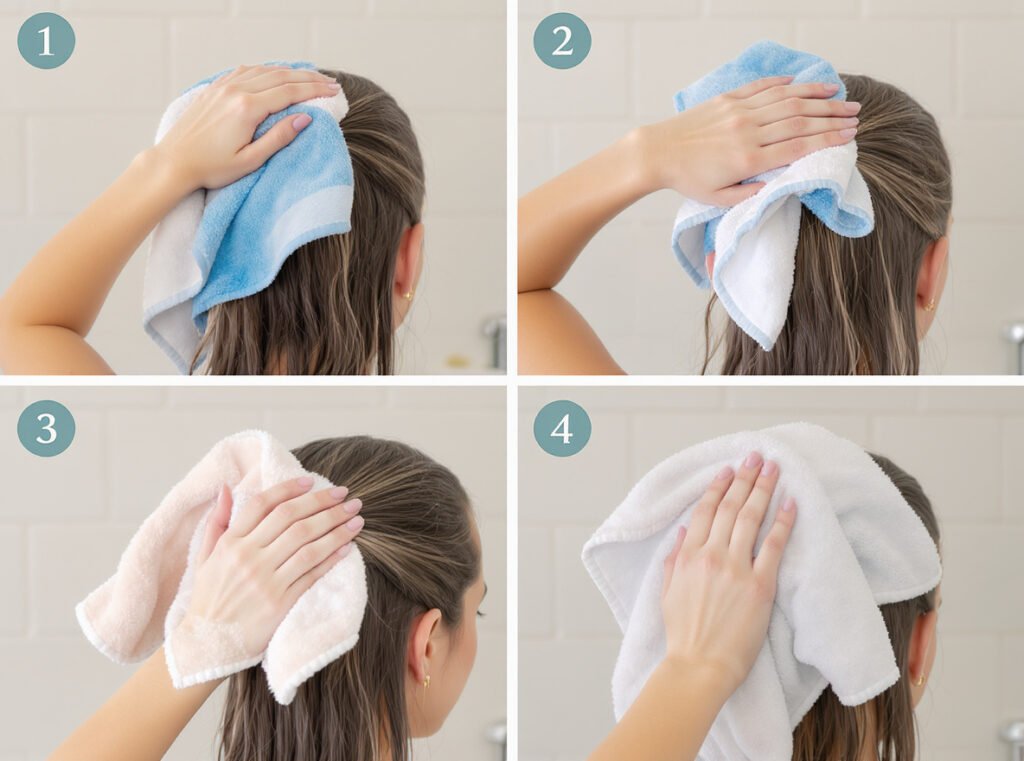
Step-by-Step Pre-Drying Process
Follow this routine to minimize heat exposure:
Water Removal: Gently squeeze hair with a clean microfiber towel. Avoid rough rubbing which can irritate the scalp and cause friction damage.
Product Application: Apply heat protectant to hair lengths and a small amount of scalp-soothing serum to sensitive areas.
Sectioning: Divide hair into manageable sections. This allows for more efficient drying and reduces the time heat is applied to any one area.
- Use wide-tooth combs to detangle wet hair gently
- Allow 10-15 minutes of natural air drying before heat styling
- Focus on removing excess moisture from the scalp area first
- Consider overnight braiding for faster morning drying
Which Hair Dryer Features Help Sensitive Scalps?
Modern hair dryer technology offers specific features designed to protect sensitive skin.
Ionic technology, multiple heat settings, cool shot buttons, and diffuser attachments are essential for sensitive scalp care. The healthiest option is to dry your scalp and hair to around 80% using a low to medium heat setting on your dryer, then finish with cool air or natural drying.
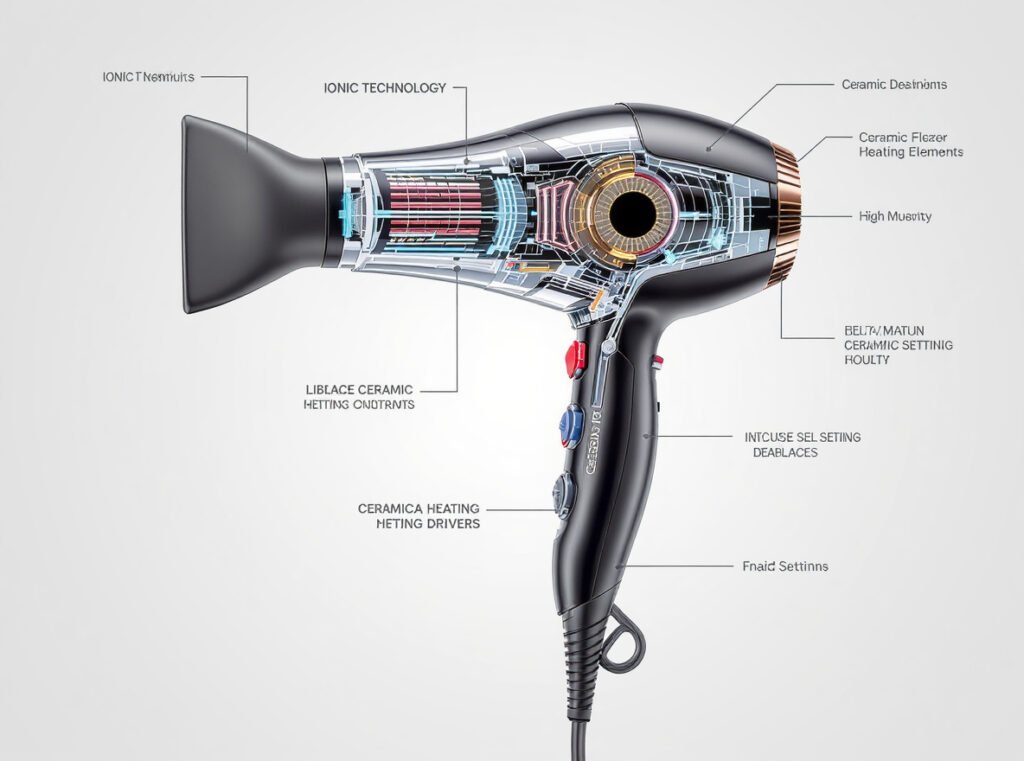
Essential Features for Scalp Comfort
Advanced hair dryers incorporate technology specifically for sensitive users:
Ionic Technology: Negative ions break down water molecules faster, reducing drying time and heat exposure. The Conason P1C generates millions of negative ions for gentler, more efficient drying.
Variable Temperature Control: Multiple heat settings allow precise temperature management. Look for dryers with at least 3 temperature options plus a cool setting.
Airflow Adjustment: Variable speed controls help you customize airflow intensity. Lower speeds are gentler on sensitive scalps.
Diffuser Attachments: These distribute airflow evenly and reduce direct heat concentration. Use the diffuser attachment to blow dry the roots, starting at the nape of your neck.
- Choose dryers with ceramic or tourmaline heating elements for even heat distribution
- Look for automatic shut-off features to prevent overheating
- Consider lightweight models to reduce arm fatigue during styling
- Prioritize quiet operation to reduce stress during styling sessions
How Often Should I Blow-Dry with a Sensitive Scalp?
Frequency management is crucial for maintaining scalp health while meeting styling needs.
Limit blow-drying to 2-3 times per week maximum for sensitive scalps. Air drying your hair can be a wonderfully simple, heat-free option. Alternate between heat styling and natural drying methods to give your scalp time to recover and maintain natural oil balance.
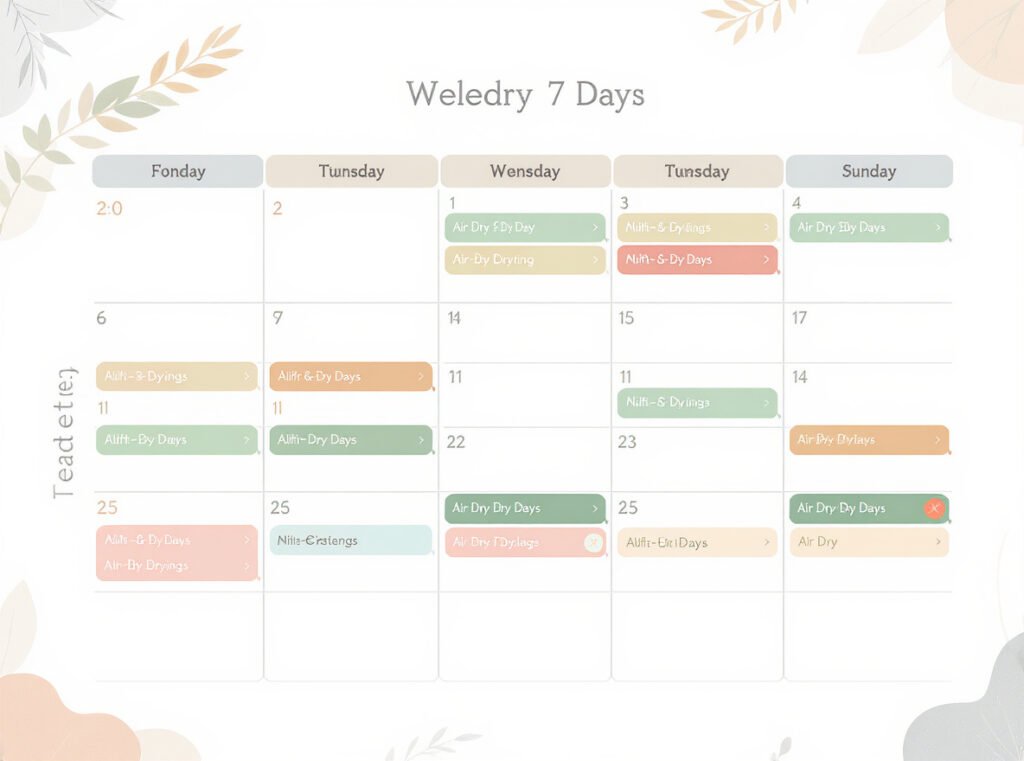
Creating a Scalp-Friendly Schedule
Balance styling needs with scalp health through strategic planning:
Weekly Schedule: Plan heat styling for important occasions only. Use Monday, Wednesday, and Friday as maximum blow-drying days, allowing recovery time between sessions.
Alternative Methods: On non-heat days, use air drying, overnight styling techniques, or protective styles that don’t require heat.
Seasonal Adjustments: Reduce heat styling frequency during winter when indoor heating already dries the air, and during summer when natural air drying is more practical.
| Styling Day | Method | Scalp Care | Expected Results |
|---|---|---|---|
| Monday | Low-heat blow-dry | Pre-treatment serum | Professional look |
| Tuesday | Air dry + styling cream | Scalp massage | Natural texture |
| Wednesday | Ionic blow-dry 80% + air finish | Heat protectant | Controlled volume |
| Thursday | Protective styling | Moisturizing treatment | Scalp recovery |
| Friday | Cool-setting blow-dry | Gentle products only | Weekend-ready style |
What Should I Do If My Scalp Gets Irritated?
Immediate response and long-term care strategies help manage scalp sensitivity effectively.
Stop heat styling immediately if you experience burning, excessive itching, or visible irritation. Cool the scalp with cold water, apply aloe vera gel, and avoid all styling products for 24-48 hours. Consult a dermatologist if symptoms persist beyond three days.
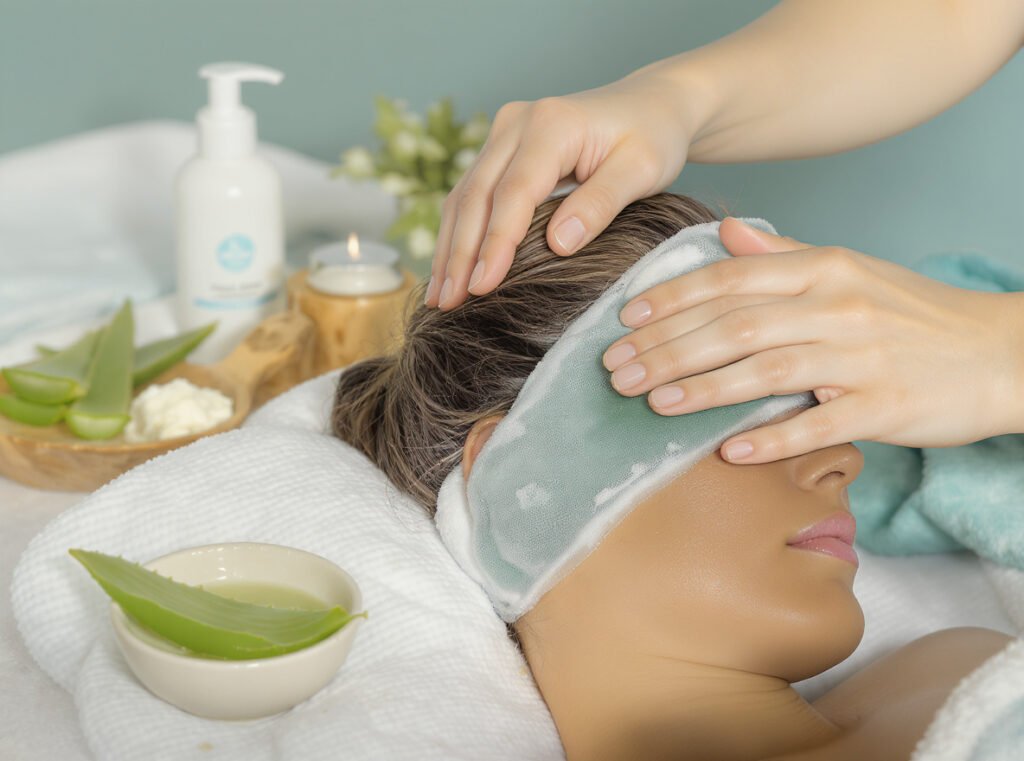
Immediate Relief Strategies
Take these steps when scalp irritation occurs:
Cooling Treatment: Rinse with cool (not cold) water to lower scalp temperature. Apply a cold, damp cloth to affected areas for 10-15 minutes.
Soothing Applications: Pure aloe vera gel, diluted tea tree oil, or chamomile tea (cooled) can provide anti-inflammatory relief.
Product Elimination: Remove all styling products, including heat protectants, until irritation subsides. Use only gentle, fragrance-free shampoos.
- Avoid scratching or rubbing the irritated areas
- Sleep on clean pillowcases to prevent bacterial infection
- Consider taking anti-inflammatory medications if approved by your doctor
- Document triggers to identify patterns and prevent future irritation
Professional hair dryers like the Conason P1C include safety features such as overheat protection and precise temperature controls that help prevent the scalp irritation common with lower-quality devices.
Are There Alternatives to Traditional Blow-Drying?
Various drying methods can achieve styled results while minimizing scalp stress.
Hybrid drying (80% blow-dry + 20% air-dry), diffuser techniques, ionic technology, and overnight styling methods provide alternatives to traditional high-heat blow-drying. Using a heat protectant, keeping the dryer on a low setting, and finishing with cool air can reduce the risk of damage.
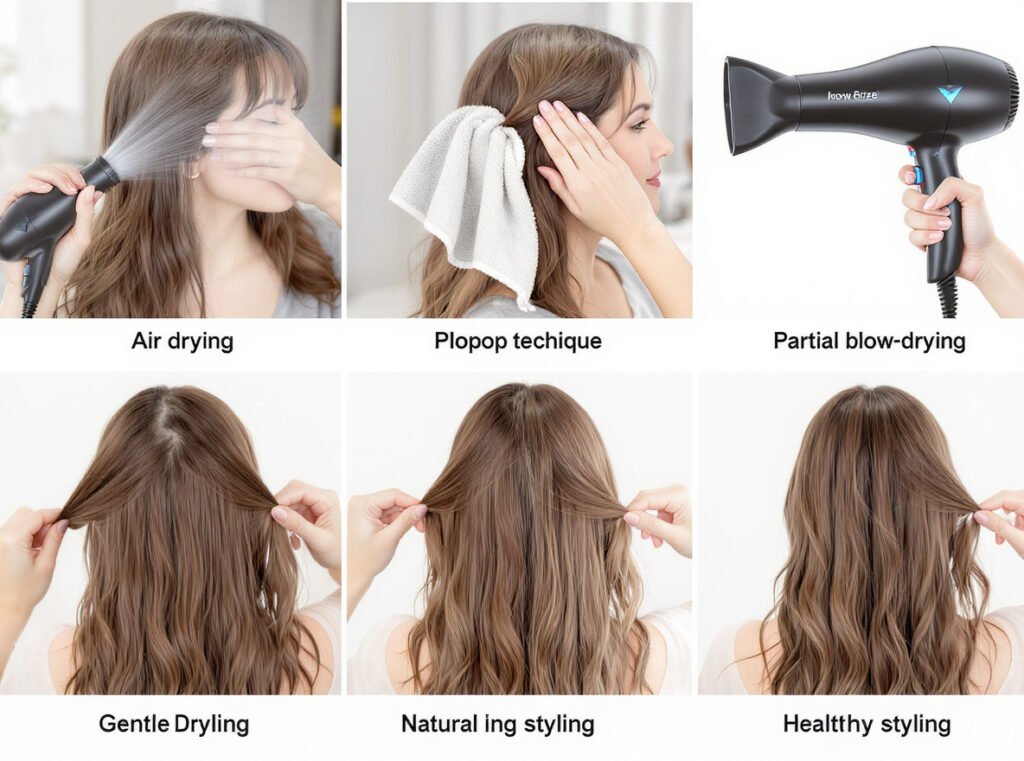
Alternative Drying Techniques
Explore gentler methods that still deliver professional results:
Plopping Method: Wrap damp hair in a microfiber towel for 20-30 minutes to remove excess water naturally before minimal heat styling.
Root Drying Only: Focus heat on roots where volume is needed, allowing lengths to air dry. This reduces total heat exposure by 60-70%.
Cool Shot Finishing: Start with low heat, then finish with cool air to set styles while soothing the scalp.
Professional Equipment: Invest in salon-quality dryers with advanced features. The Conason P1C offers multiple temperature settings, ionic technology, and efficient drying that reduces overall heat exposure time.
- Try twist-out or braid-out styles that require minimal heat
- Use silk scarves or bonnets for overnight styling
- Consider professional blowout services for special occasions
- Experiment with leave-in products that enhance air-dried styles
For wholesalers and retailers looking to offer their customers the best sensitive scalp solutions, explore our complete range of ionic hair dryers designed specifically for gentle, effective styling at https://conason.com/product/.
Summary
The best blow-drying method for sensitive scalps combines scientific temperature control (47°C maximum), proper 15cm distance with continuous movement, and limited frequency (2-3 times weekly maximum). Research proves that correct technique with professional ionic dryers actually causes less damage than air drying alone, making tool quality and proper method essential for scalp health.
Ready to upgrade your hair care routine? Discover professional-grade ionic hair dryers designed for sensitive scalps, or browse our complete collection of wholesale hair styling tools. Contact our team for bulk pricing and distributor opportunities that help you serve customers with sensitive scalp needs.