Understanding air pressure in hair dryers is crucial for wholesalers and retailers selecting high-performance models. Many buyers focus solely on wattage, yet air pressure directly impacts drying efficiency and customer satisfaction with your product offerings.
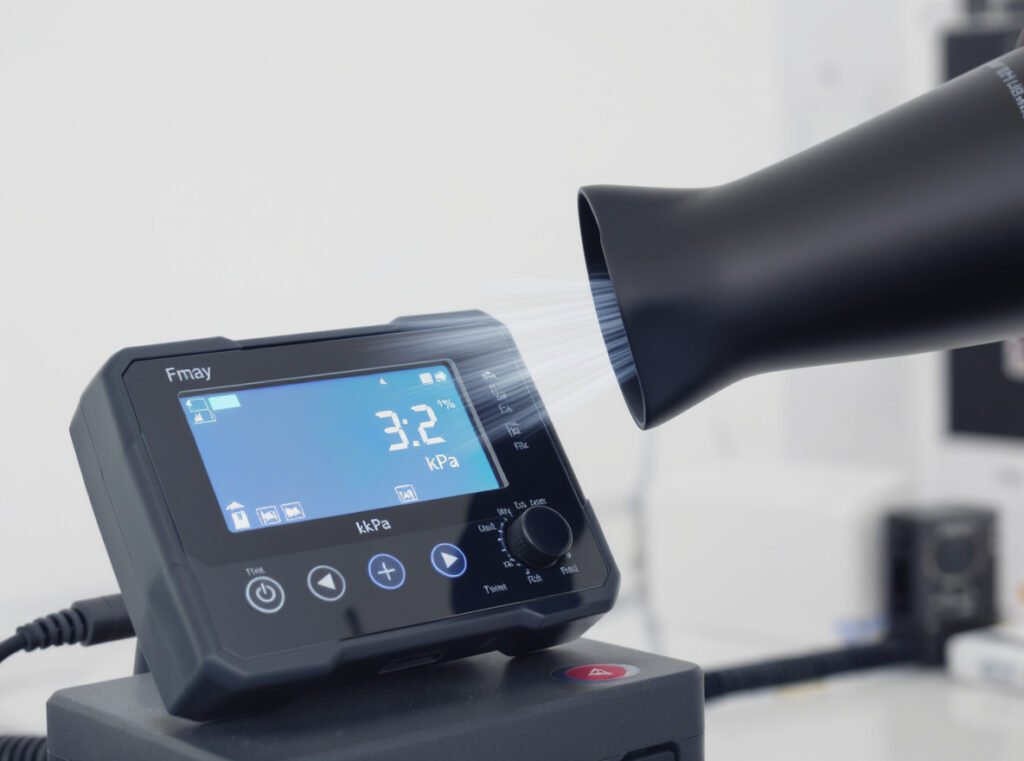
Air pressure in hair dryers is measured using precision manometers positioned 200mm from the air outlet, following IEC 61855 international standards. Professional hair dryers typically operate between 2.0-4.0 kPa (kilopascals), with elite models like the Dyson Supersonic generating 3.2 kPa. Higher pressure indicates stronger airflow delivery and 25-40% faster drying performance.
This technical knowledge will help you make informed purchasing decisions and better serve your customers.
What Exactly Are Pascals and How Do They Apply to Hair Dryers?
Understanding pascals helps you evaluate hair dryer performance more accurately than relying solely on wattage specifications.
A pascal (Pa) is the standard international unit for measuring pressure, defined as one newton of force applied over one square meter. In hair dryers, pressure is measured in kilopascals (kPa) where 1 kPa equals 1,000 pascals. For context, atmospheric pressure at sea level is approximately 101.3 kPa.

Professional vs Consumer Pressure Ranges
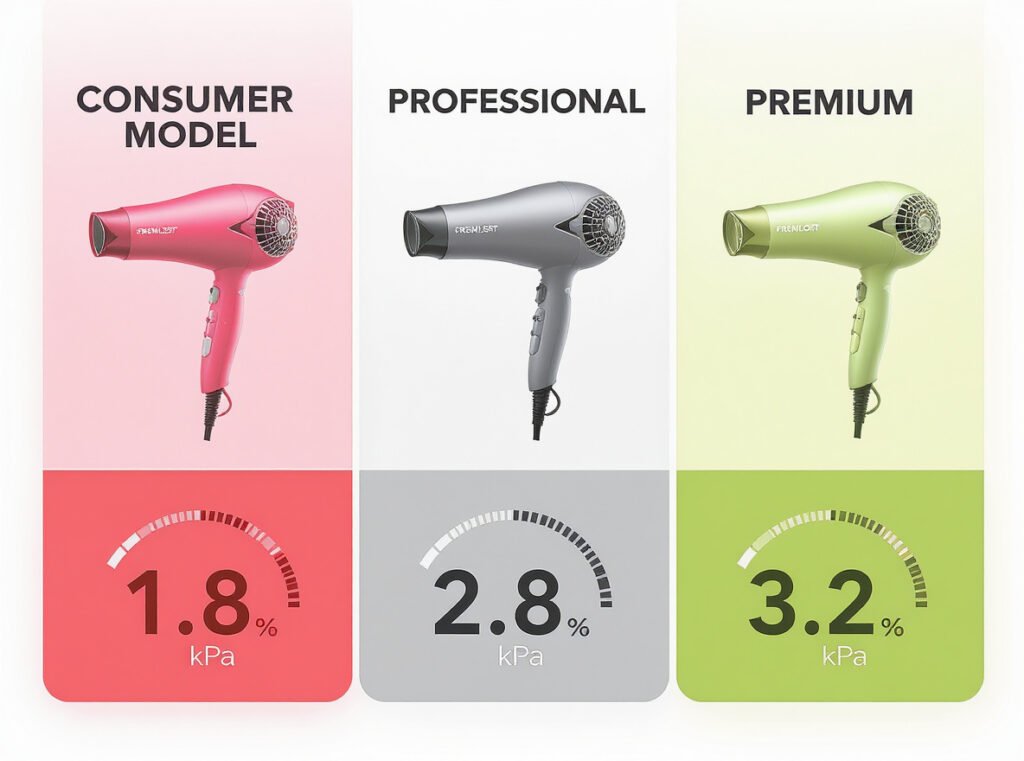
The pressure specifications clearly differentiate market segments:
Professional hair dryers operate in the 2.0-4.0 kPa range, with high-end models achieving the upper spectrum. The Dyson Supersonic Professional generates 3.2 kPa through its Digital V9 motor spinning at 110,000 rpm, representing the current performance benchmark.
Mid-range professional models typically deliver 2.5-3.0 kPa, sufficient for most salon applications while maintaining cost-effectiveness. Consumer models generally operate at 1.5-2.0 kPa, adequate for home use but lacking professional-level performance.
| Dryer Category | Pressure Range (kPa) | Typical Applications |
|---|---|---|
| Consumer Models | 1.5-2.0 | Daily home use, basic styling |
| Professional Mid-Range | 2.5-3.0 | Salon use, moderate volume |
| Professional High-End | 3.0-4.0 | Premium salons, rapid styling |
How Do Manufacturers Measure Air Pressure in Hair Dryers?
Professional measurement techniques ensure accurate specifications that help you compare different models effectively.
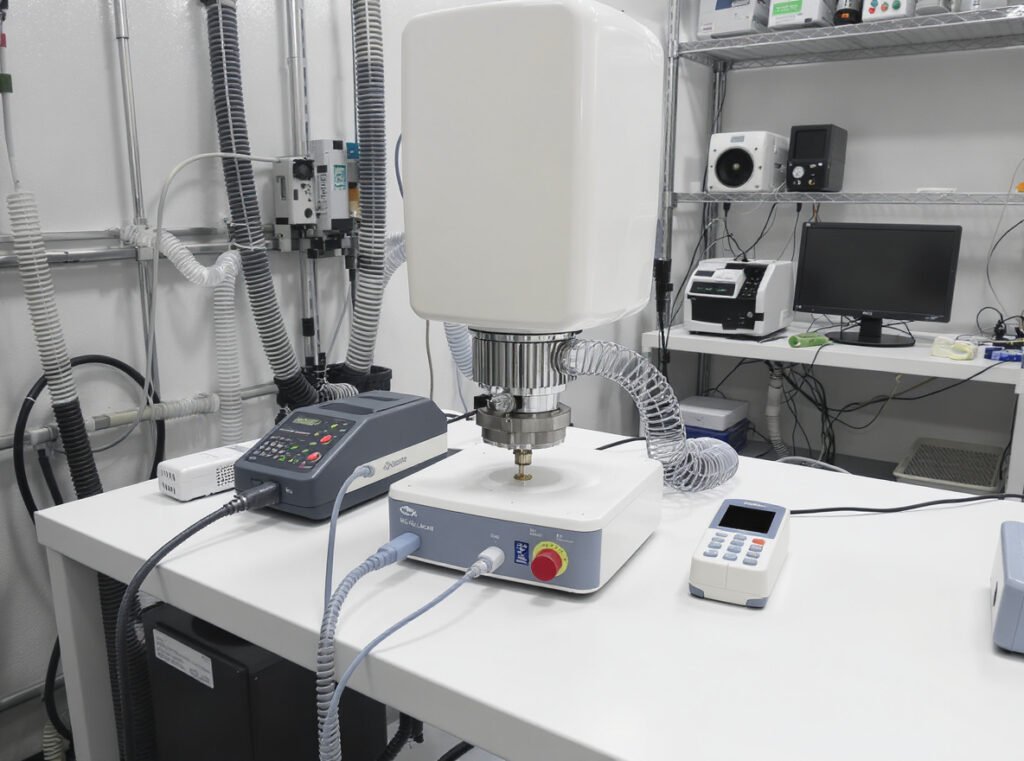
Manufacturers follow IEC 61855 international standards for measuring hair dryer performance. Testing requires precision manometers positioned at 200mm from the air outlet, with measurements taken at maximum airflow settings, all attachments removed, and heating function disabled to isolate pure airflow performance.
Standardized Testing Procedures
The measurement process follows strict protocols established by international standards:
Multiple hot-wire anemometers are arranged along horizontal test arms, taking measurements at 5mm increments both vertically and horizontally across the airflow pattern. This comprehensive mapping ensures accurate representation of pressure distribution across the entire outlet area.
Manufacturing facilities utilize dual-port manometers and orifice flow meters designed according to ASME standards for precise measurements. These instruments achieve ±10% accuracy, with higher precision for elevated pressure readings.
Temperature compensation remains crucial during testing since air pressure varies with temperature changes. All measurements are standardized at room temperature (approximately 20°C) for consistent comparisons between different models and manufacturers.
What Air Pressure Range Should You Look for in Professional Hair Dryers?
Different pressure ranges serve specific market segments and customer needs effectively.
Professional-grade hair dryers should deliver minimum 2.8 kPa for salon applications, while elite models generating 3.0+ kPa command premium positioning. Consumer retail channels can effectively serve customers with 2.0+ kPa models, providing noticeable performance improvements over basic units.
Motor Technology and Pressure Generation
Modern pressure generation depends heavily on motor technology selection:
Brushless DC (BLDC) Motors have become the standard for sustained high-pressure output. The CHI LAVA PRO features a 1000-hour BLDC motor designed specifically for continuous professional use, maintaining consistent pressure levels even under demanding salon conditions.
AC Motors in Professional Models like the GHD Air (1,600W) and L’ange Soleil (1,875W) generate substantial pressure through high-speed impeller systems. Quality AC motors can achieve 2.8-3.5 kPa sustained pressure, though slightly less efficient than BLDC alternatives.
Variable speed settings allow optimization of the pressure-flow relationship for different applications. High-pressure, low-volume settings (3.0+ kPa with reduced CFM) excel at precision styling, while moderate pressure, high-volume combinations work effectively for initial drying phases.
How Does Air Pressure Relate to CFM and Overall Performance?
The relationship between pressure and airflow volume determines actual drying effectiveness under real-world conditions.
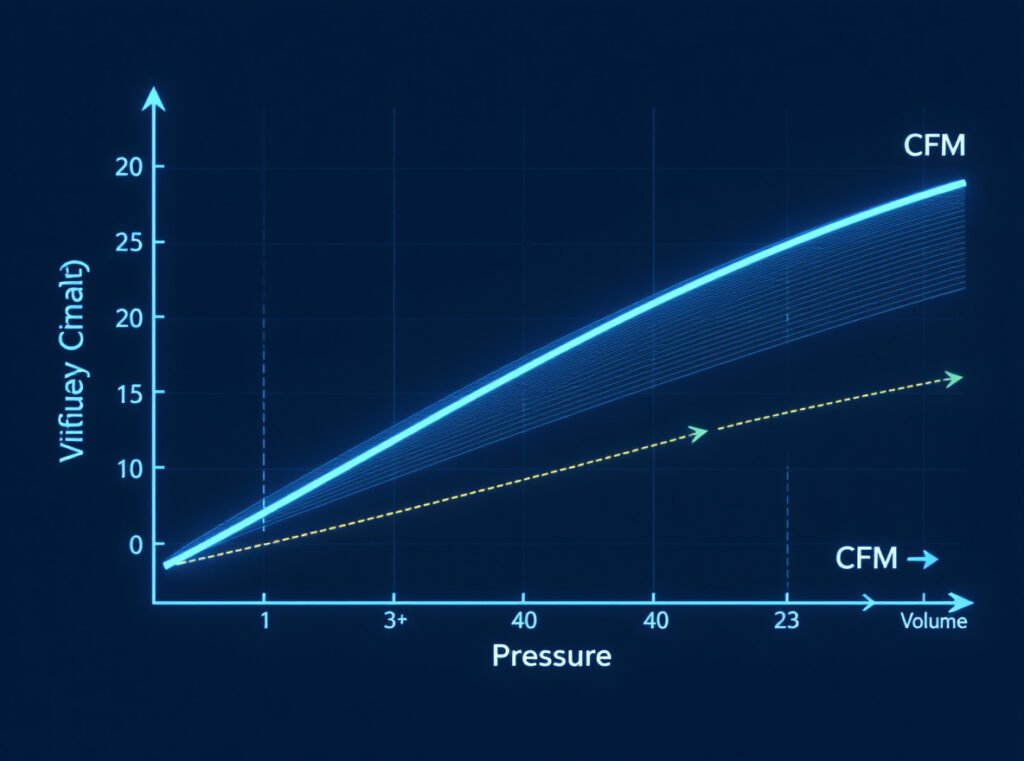
Air pressure (kPa) and airflow volume (CFM) follow inverse relationship principles – as pressure increases, flow rate decreases, and vice versa. Professional hair dryers balance both metrics for optimal performance. The Dyson Supersonic delivers 28 CFM while maintaining 3.2 kPa pressure, enabling both rapid moisture removal and precise styling control.
Understanding System Performance Curves
Hair dryer performance follows system curve principles where pressure and airflow relationships determine effectiveness under varying load conditions:
As airflow resistance increases – such as when using concentrator attachments or styling through dense hair – the system requires higher pressure to maintain effective CFM delivery. This explains why pressure specifications matter more than CFM alone for professional applications.
The pressure-volume balance creates distinct performance characteristics:
- High pressure, lower volume: Concentrated airflow for precision styling and finishing work
- Moderate pressure, high volume: Broad coverage for initial drying phases
- Balanced approach: Versatile performance across different styling needs
Professional models optimize this balance through variable speed controls, allowing stylists to adjust pressure-flow combinations based on specific hair types and styling techniques.
What Impact Does Air Pressure Have on Drying Time and User Experience?
Pressure directly affects customer satisfaction and product performance perception in measurable ways.
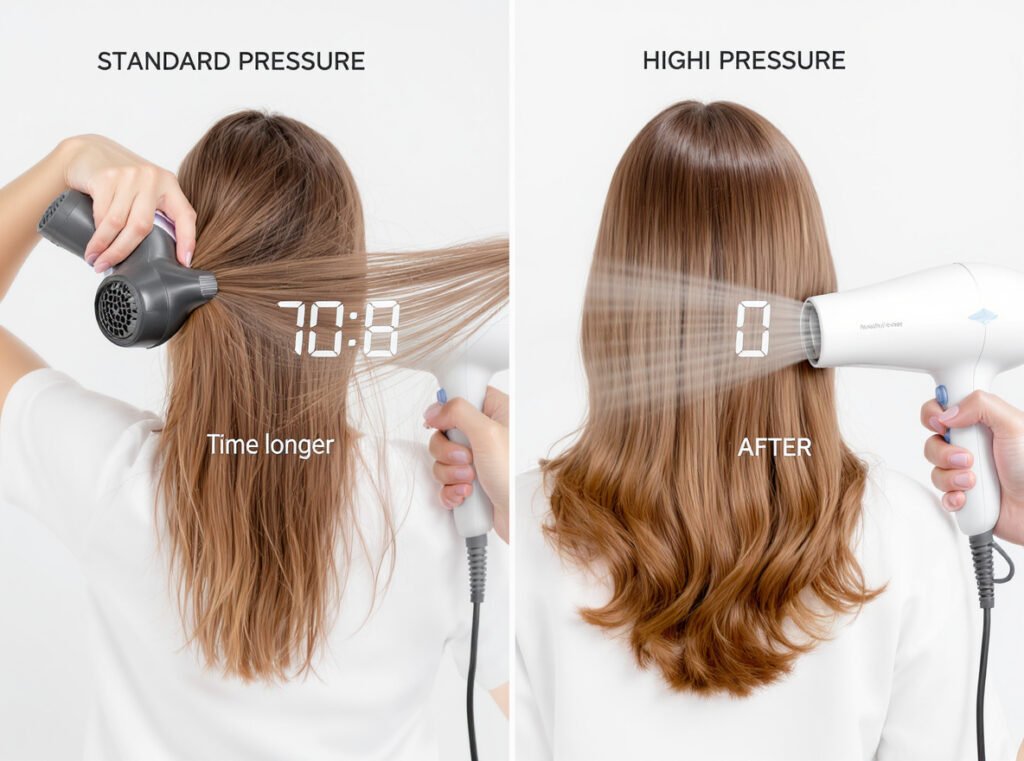
Higher air pressure reduces drying time by 25-40% compared to standard models. Hair dryers generating 3.0+ kPa can achieve 54-second drying times for 8-inch hair samples in laboratory testing, significantly outperforming competitors operating at 2.0 kPa or lower pressure levels.
Customer Benefits of Higher Pressure Systems
Professional users particularly value these quantifiable performance improvements:
Enhanced Moisture Removal: Higher pressure forces water molecules away from hair surfaces more efficiently than thermal drying alone. This mechanical action penetrates hair layers effectively, reaching moisture at scalp level that lower-pressure systems struggle to address.
Reduced Heat Damage Risk: Professional-grade pressure enables effective drying at lower temperatures. Higher pressure systems provide better styling control without excessive heat, reducing thermal damage while maintaining professional results.
Consistent Performance: Professional dryers with BLDC motors maintaining 2.8+ kPa can operate for hours without noticeable pressure drop, essential for busy salon environments where dryers run continuously.
| Pressure Level | Drying Time Reduction | Professional Benefits |
|---|---|---|
| 2.0-2.5 kPa | 15-25% faster | Noticeable improvement |
| 2.5-3.0 kPa | 25-35% faster | Professional standard |
| 3.0+ kPa | 35-50% faster | Premium performance |
How Can Retailers Use Air Pressure Specifications in Marketing?
Technical specifications become powerful selling points when properly communicated to customers.
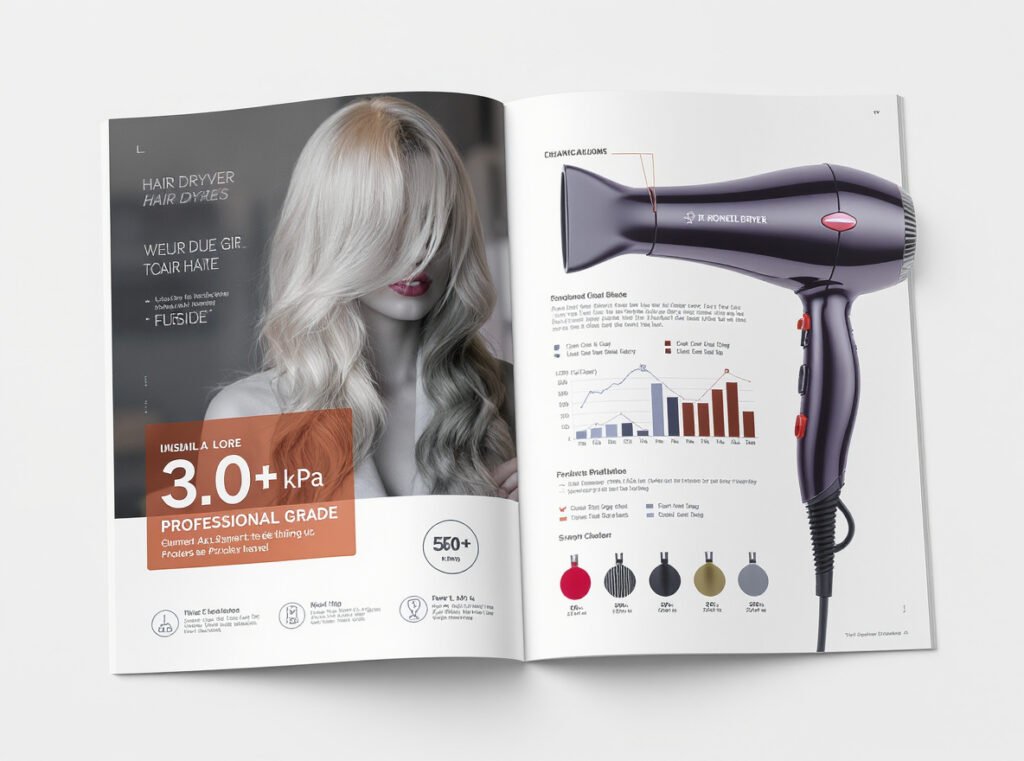
Emphasize specific kPa ratings alongside familiar metrics like wattage and heat settings. Explain how 3.0+ kPa pressure translates to professional-grade performance and faster drying times, helping customers understand the value proposition of premium models versus basic alternatives.
Effective Marketing Approaches
Transform technical data into customer benefits through targeted messaging:
For Professional Salon Customers
- “3.2 kPa pressure delivers Dyson-level performance”
- “Professional 2.8+ kPa system reduces client processing time by 30%”
- “Sustained high-pressure output maintains consistency through busy days”
For Retail Customers
- “Professional-grade 3.0 kPa pressure cuts drying time in half”
- “Advanced pressure technology works effectively on all hair types”
- “Salon-quality performance for home use”
Educational content helps customers understand the relationship between pressure, performance, and pricing. Demonstration opportunities using pressure measurements showcase performance differences tangibly, helping consumers justify premium product investments.
What Should Wholesalers Consider When Evaluating Pressure Specifications?
Accurate specifications help you select products that meet market demands and customer expectations.
Establish minimum pressure thresholds for different market segments: 2.8+ kPa for professional salon distribution, 2.0+ kPa for consumer retail channels. Verify that stated pressure ratings maintain ±10% consistency under continuous operation and various attachment configurations to prevent customer satisfaction issues.
Quality Assessment and Competitive Positioning
Several factors influence wholesale purchasing decisions based on pressure specifications:
Performance Verification: Request detailed technical specifications including test conditions following IEC 61855 standards. Reliable manufacturers provide comprehensive documentation showing pressure consistency under load conditions.
Market Positioning Strategy: Models generating 3.0+ kPa can command premium pricing and appeal to professional buyers, while 2.2-2.8 kPa products effectively serve quality-conscious consumer markets.
Supply Chain Reliability: Higher pressure systems require robust internal components. Evaluate motor specifications, impeller design, and housing materials to ensure long-term reliability under demanding use conditions.
For professional wholesale buyers seeking verified high-pressure performance, consider our P1C high-speed hair dryer featuring advanced motor technology and optimized pressure delivery. Visit https://conason.com/product/conason-negative-ionic-fast-hair-dryer-with-screen-home-salon-use-p1c/ for detailed technical specifications.
How Does Advanced Pressure Technology Compare Across Leading Brands?
Understanding competitive positioning helps you select products that offer genuine performance advantages.
Leading manufacturers like Dyson set the benchmark at 3.2 kPa, while professional models from established brands typically achieve 2.5-3.0 kPa. The Conason P1C delivers competitive pressure performance with advanced ionic technology, providing professional-grade results at wholesale-friendly pricing for international markets.
Technology Integration and Performance Optimization
Modern high-performance hair dryers integrate multiple technologies for enhanced pressure delivery:
Advanced motor design creates higher pressure output while maintaining energy efficiency. Digital controls allow precise pressure adjustment for different hair types and professional styling requirements.
Ionic technology works synergistically with high-pressure airflow, breaking down water molecules more effectively while reducing static and improving hair texture. This combination provides faster drying with enhanced hair health benefits.
Intelligent temperature management prevents overheating while maintaining optimal pressure levels throughout extended use. This thermal protection extends motor life and ensures consistent performance under professional salon conditions.
Professional-grade components ensure reliable operation under frequent use. Quality construction becomes essential when operating at higher pressure levels, making component selection crucial for long-term performance and customer satisfaction.
Summary
Air pressure measurement in hair dryers, expressed in kilopascals, directly impacts drying performance and customer satisfaction. Professional models operating at 2.8+ kPa offer superior results with 25-40% faster drying times compared to standard consumer units, providing measurable performance benefits that justify premium positioning and pricing strategies.
Ready to enhance your product offerings with professionally-tested, high-pressure hair dryers? Explore our complete collection at https://conason.com/product/ or contact our wholesale team for detailed technical specifications and competitive pricing on models that deliver verified pressure performance for international markets.
Contact us today for wholesale pricing on professional hair dryers featuring verified kPa ratings and comprehensive technical documentation for your B2B customers.