Traveling with your hair dryer can be frustrating when you’re unsure whether it’ll work abroad. Many people have experienced the disappointment of plugging in their styling tools only to find they don’t work or, worse, get damaged by incompatible voltage systems.
Dual-voltage hair dryers use specialized internal circuitry that can automatically or manually switch between 110-120V and 220-240V power systems. Manual models require users to physically toggle a switch that reconfigures heating elements from parallel to series connections, while automatic versions employ voltage sensors and microcontroller technology to detect incoming power and adjust internal components instantly.
But how exactly does this sophisticated technology work, and what should wholesale buyers know before investing in these versatile styling tools?
What Internal Components Enable Dual-Voltage Operation?
Understanding dual-voltage capability starts with examining the specialized internal architecture that makes global compatibility possible.
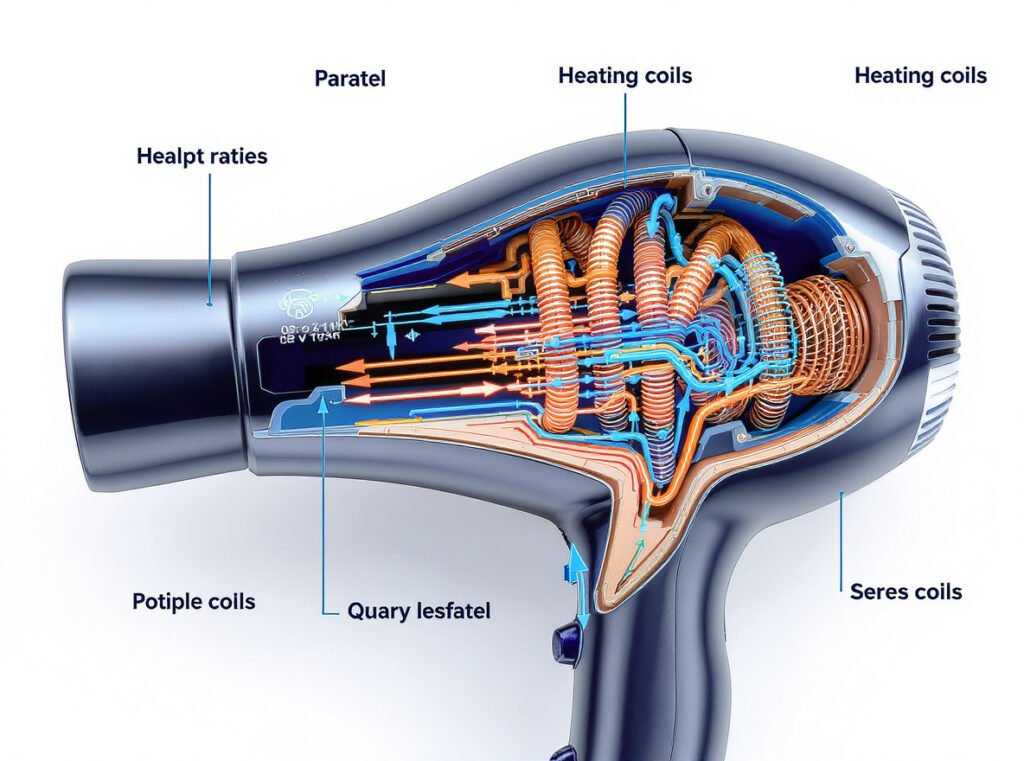
A dual-voltage hair dryer contains two heating coils that can be connected in different configurations depending on the input voltage. At 110-120V, the heating elements operate in parallel configuration for full power draw, while at 220-240V, the same elements switch to series configuration to maintain appropriate power levels at higher voltage.
The fundamental engineering challenge involves maintaining consistent performance across vastly different electrical systems. Traditional single-voltage hair dryers have heating elements and motors calibrated for one specific voltage range, making them incompatible with international power standards.
Key internal components that enable dual-voltage operation:
• Dual heating coils – Engineered to handle both voltage configurations safely
• Voltage detection circuits – Monitor incoming power and signal switching mechanisms
• Relay switching systems – Physically or electronically reconfigure internal connections
• Frequency-compensated motors – Maintain consistent RPM across 50Hz and 60Hz power systems
• Thermal protection circuits – Prevent overheating in both voltage modes
| Component | 110V Configuration | 220V Configuration | Performance Impact |
|---|---|---|---|
| Heating Elements | Parallel connection | Series connection | Consistent wattage output |
| Motor Speed Control | Direct 60Hz operation | Frequency compensation | Uniform airflow delivery |
| Safety Circuits | Standard protection | Enhanced surge protection | IEC 60335-2-23 compliance |
The sophisticated design ensures that whether you’re in New York (120V) or Paris (230V), your hair dryer delivers the same professional styling results without compromising safety or performance.
How Do Manual Dual-Voltage Switches Reconfigure Internal Circuits?
Most dual-voltage hair dryers employ manual switching mechanisms that allow users to select the appropriate voltage setting before use.
The manual switch physically reconfigures the electrical connections between heating elements. Users typically need a coin or small screwdriver to operate a recessed toggle, sliding mechanism, or rotary dial located on the handle. This switch changes the heating element configuration from parallel (for 110V) to series (for 220V) connections, ensuring safe operation at different voltage levels.
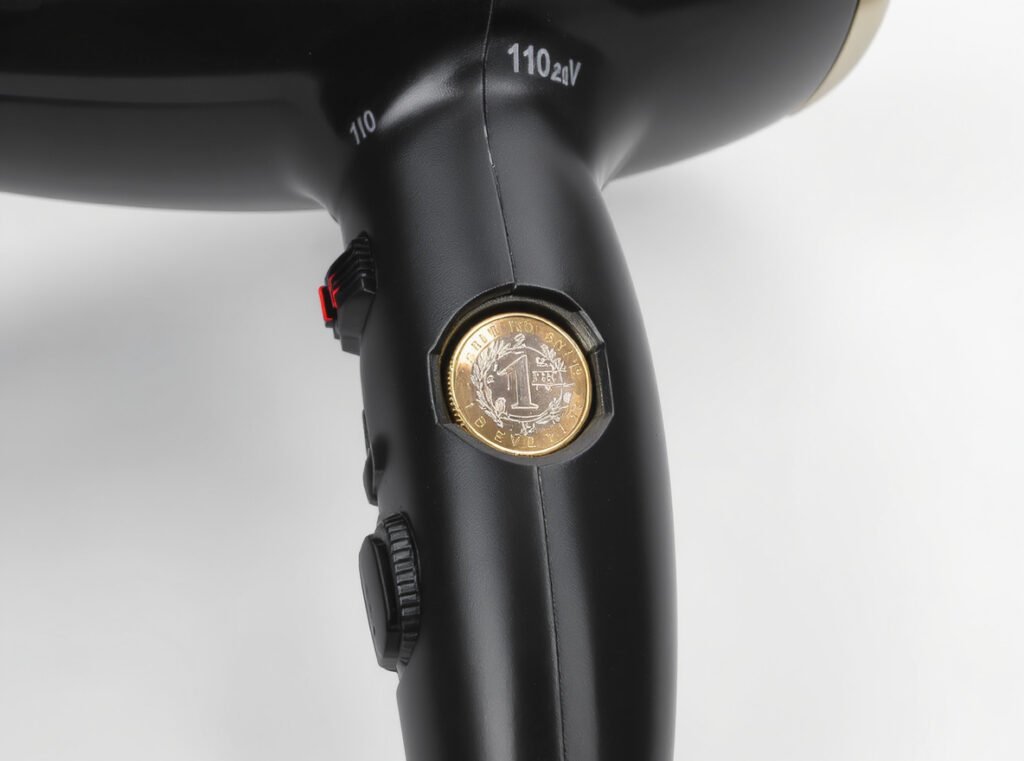
The switching process involves fundamental electrical principles. When heating elements are connected in parallel at 110V, they draw maximum current for optimal heat generation. Switching to series configuration at 220V reduces the effective current draw, preventing component damage while maintaining similar heat output.
Critical manual switching procedures:
Pre-Use Preparation
Always ensure the device is unplugged before changing voltage settings. The switch typically requires a coin to turn a recessed dial or slide mechanism to prevent accidental changes during operation.
Voltage Verification
Check your destination’s electrical standards before travel. North America uses 110-120V, while Europe, Asia, and most other regions operate on 220-240V systems.
Switch Position Indicators
Most models feature clear markings (110/220, 125/250, or colored indicators) showing the current setting. Some advanced models include LED indicators that confirm the selected voltage mode.
Common User Errors
Forgetting to switch settings accounts for 60% of dual-voltage hair dryer failures. Using incorrect voltage settings can result in component failure, fire hazards, or complete appliance destruction.
The manual approach offers reliability and cost-effectiveness, though it requires user awareness and proper operation. For wholesale buyers serving international markets, providing clear instruction materials reduces customer support issues and product returns.
What Advanced Technology Powers Automatic Voltage Detection?
Automatic dual-voltage hair dryers represent the cutting-edge of travel-friendly styling technology, eliminating user error through sophisticated electronic systems.
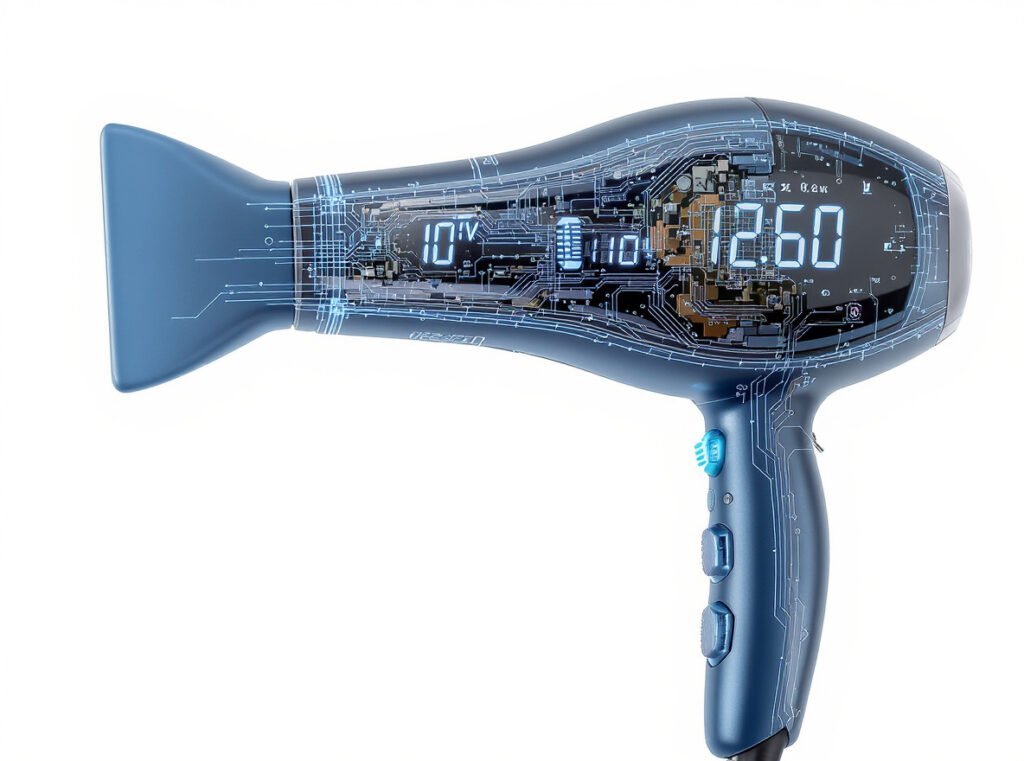
Automatic voltage detection uses voltage sensors and microcontroller technology to continuously monitor input voltage and automatically adjust internal circuits. These systems employ voltage sensing circuits that measure incoming AC voltage, microcontroller processing that interprets readings, and automatic relay switching that configures internal components within milliseconds of plugging in.
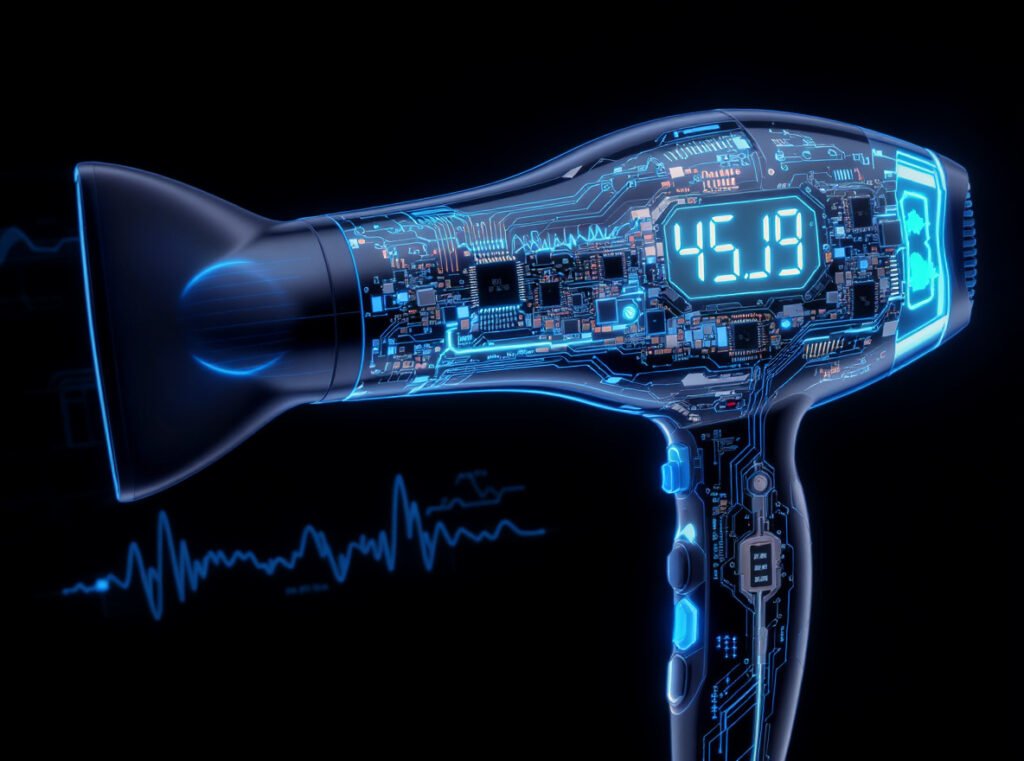
The automatic detection process occurs through multiple sophisticated systems working in harmony:
Voltage Sensing Technology
Advanced sensors continuously monitor the RMS (Root Mean Square) voltage of incoming AC power. When voltage exceeds approximately 150V, the system recognizes it as 220V operation and triggers appropriate switching mechanisms.
Microcontroller Processing
Premium models incorporate dedicated microprocessors that analyze voltage readings, manage switching logic, and provide real-time system monitoring. These processors can store user preferences and automatically recall settings.
Smart Switching Systems
Instead of mechanical switches, automatic models use solid-state relays or MOSFET switches to reconfigure circuits instantly. This eliminates mechanical failure points and ensures consistent operation over thousands of switching cycles.
Advanced features in premium automatic models:
| Technology Feature | Capability | User Benefit |
|---|---|---|
| Real-time Voltage Display | Shows detected voltage on LED/LCD screen | Instant confirmation of proper operation |
| Memory Functions | Recalls preferred heat/speed settings | Consistent styling experience globally |
| Automatic Shut-off | Thermal and electrical safety monitoring | Enhanced safety compliance |
| Frequency Compensation | Adapts to 50Hz/60Hz variations | Uniform motor performance worldwide |
Models like the T3 Micro Switch Kit feature “Auto World Voltage” technology that seamlessly adapts to any global voltage standard from 100V to 240V. These systems provide peace of mind for frequent travelers while delivering professional salon-quality results anywhere in the world.
Why Do Single-Voltage Hair Dryers Require Bulky Voltage Converters?
The limitations of single-voltage hair dryers create significant challenges for international users, making dual-voltage capability increasingly valuable.
Single-voltage hair dryers require voltage converters because their internal components are designed for specific voltage ranges. When a 110V device connects to 220V power, it receives four times the intended power, causing immediate damage through excessive current draw, motor damage from overspeed operation, and heating element burnout from power overload.
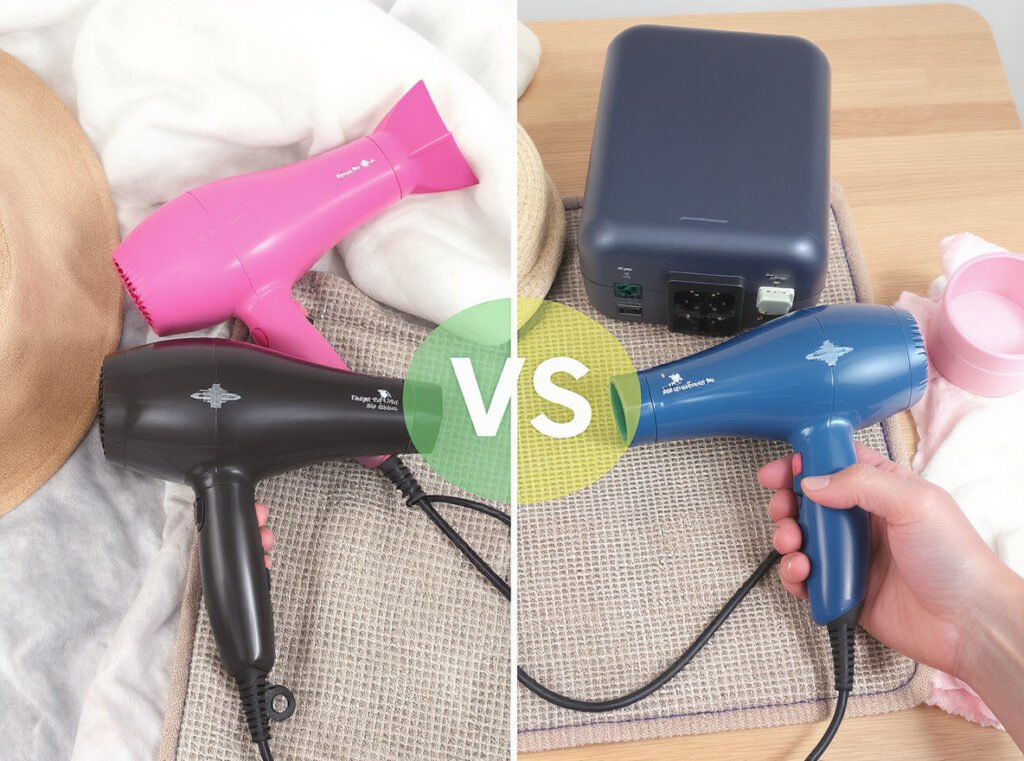
Understanding the technical reasons helps explain why converters are problematic for high-power appliances:
Power Overload Scenarios
A 1500W hair dryer designed for 120V will attempt to draw 3000W when connected to 240V power without proper conversion. This dramatic power increase overwhelms heating elements and motor windings, typically causing immediate failure.
Converter Limitations
Hair dryers typically consume 1500-2000 watts, requiring converters rated at 2-3 times the device wattage to handle startup surges. Quality converters for this power level cost $100-300 and weigh 2-5 pounds, making them impractical for travel.
Performance Issues with Converters
Even when converters function properly, they often introduce power quality issues including voltage fluctuations, frequency distortion, and electromagnetic interference that affect hair dryer performance.
Problems with voltage converter dependency:
• Size and Weight – Quality converters are bulky and heavy for travel
• Reliability Issues – Cheap converters often fail, potentially damaging connected devices
• Heat Generation – Converters produce significant heat during operation
• Noise and Interference – Can affect other electronic devices nearby
• Limited Compatibility – Many converters don’t handle motor startup surges properly
The economic impact extends beyond initial converter costs. Converter failures can damage expensive styling tools, requiring complete replacement. For businesses, this creates warranty issues and customer dissatisfaction that dual-voltage models eliminate entirely.
Are Automatic Dual-Voltage Hair Dryers Worth the Premium Investment?
The price difference between manual and automatic dual-voltage hair dryers raises important questions about value and return on investment for both consumers and retailers.
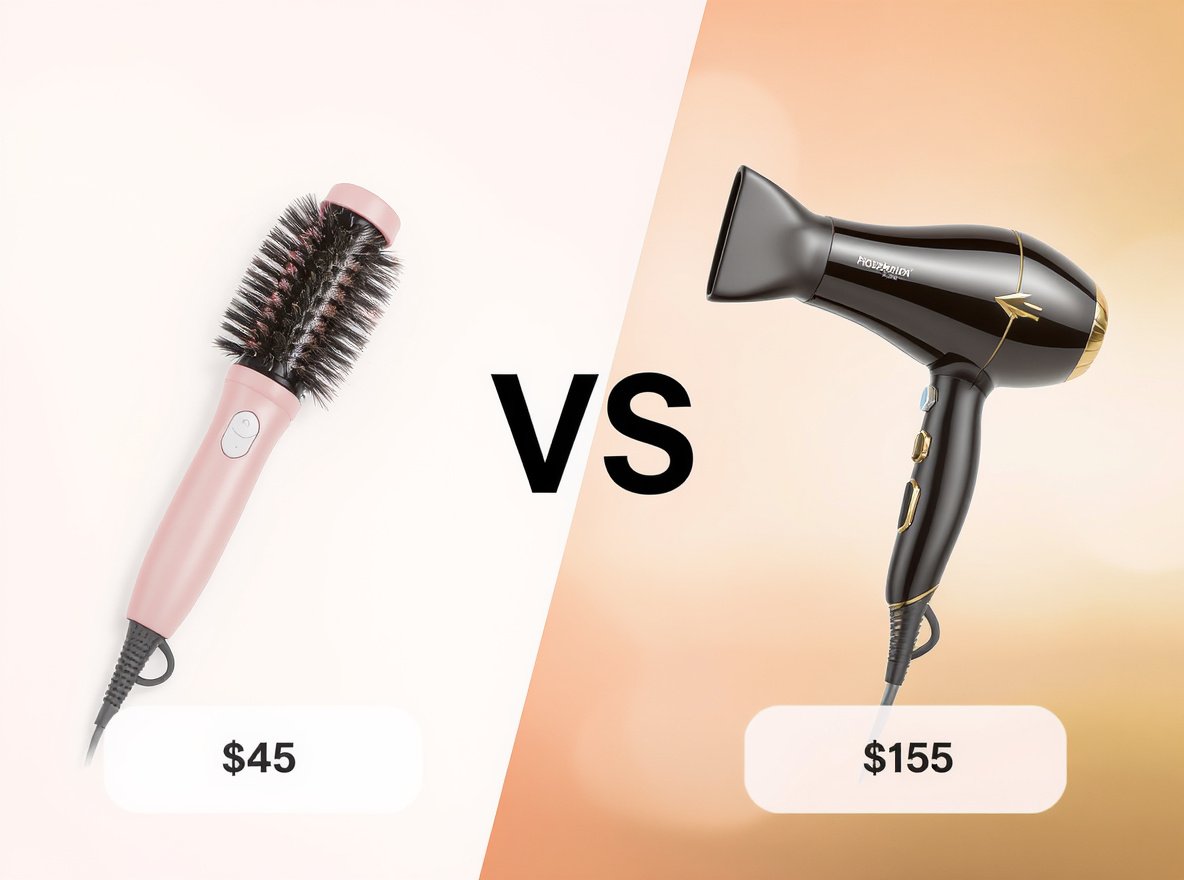
Automatic dual-voltage hair dryers typically cost 20-40% more than manual switching models but offer superior convenience, enhanced safety features, and professional performance consistency. Advanced models include digital displays showing voltage and settings, memory functions that recall preferred configurations, and automatic thermal shutdown systems that exceed IEC 60335-2-23 safety standards.
From a business perspective, the premium pricing reflects sophisticated technology and manufacturing costs, but also enables higher profit margins and premium market positioning.
Performance Advantages
Automatic models eliminate the primary cause of dual-voltage hair dryer failure – incorrect manual switch settings. Professional stylists and frequent travelers particularly value the plug-and-play convenience that automatic detection provides.
Safety Enhancement
Advanced automatic systems include multiple safety features beyond basic voltage switching: automatic overheat protection, thermal fuse systems, and electrical fault detection that manual models typically lack.
Customer Experience Benefits
Elimination of user error reduces warranty claims and customer support requirements. Users simply plug in the device anywhere globally and achieve consistent professional results immediately.
Investment comparison for retailers:
| Factor | Manual Models | Automatic Models | Business Impact |
|---|---|---|---|
| Wholesale Cost | Baseline | 25-35% premium | Higher initial investment |
| Retail Markup | 40-60% | 60-80% | Improved profit margins |
| Return Rate | 5-8% | 2-3% | Reduced processing costs |
| Market Position | Mid-tier | Premium segment | Enhanced brand perception |
| Support Requirements | High documentation needs | Minimal instruction required | Lower operational costs |
For wholesale buyers, automatic models like our P1C high-speed hair dryer with intelligent voltage detection offer compelling advantages. The combination of convenience, safety, and consistent performance appeals to both retailers and end users, justifying premium pricing in competitive markets.
What Technical Specifications Should Wholesalers Prioritize?
Selecting dual-voltage hair dryers for wholesale inventory requires understanding both technical requirements and market demands across different regions.
Successful dual-voltage hair dryers should feature 100-240V compatibility (accommodating Japan’s 100V to Europe’s 240V range), brushless motors with 100,000+ RPM ratings for durability, IEC 60335-2-23 safety certification for international compliance, and wattage ratings between 1500-1875W for optimal performance efficiency.
Essential technical specifications for wholesale evaluation:
Voltage and Frequency Compatibility
Ensure models support the complete global range from 100V to 240V with both 50Hz and 60Hz frequency compatibility. This universal compatibility eliminates regional restrictions and maximizes market potential.
Motor Technology
Brushless motors offer superior durability and consistent performance across voltage ranges. High-RPM ratings (100,000+ RPM) indicate professional-grade components that appeal to both consumer and salon markets.
Safety Certifications
International safety compliance is crucial for market acceptance. Look for comprehensive certifications including UL (North America), CE (Europe), and specific country approvals for target markets.
Quality indicators for wholesale selection:
| Specification Category | Minimum Requirements | Premium Features | Market Impact |
|---|---|---|---|
| Voltage Range | 110-240V | 100-240V universal | Broader market access |
| Motor Type | AC motor | Brushless DC motor | Extended lifespan |
| Safety Standards | Basic CE/UL | IEC 60335-2-23 full compliance | Regulatory acceptance |
| Technology Features | Manual switching | Automatic detection + display | Premium positioning |
| Warranty Coverage | 1 year domestic | 2+ years international | Customer confidence |
Advanced Feature Considerations
Modern consumers expect technology integration including digital displays, ionic technology for hair health, ceramic or tourmaline heating elements for even heat distribution, and multiple heat/speed settings for versatility.
Market Positioning Strategy
Different dual-voltage technologies serve distinct market segments. Automatic models work well for premium markets and frequent travelers, while manual switching models serve price-conscious consumers effectively.
Our P1C high-speed hair dryer exemplifies these quality standards with automatic voltage detection, brushless motor technology, and comprehensive safety certifications, making it an excellent choice for wholesalers serving diverse international markets.
How Do Global Electrical Standards Influence Hair Dryer Design?
Understanding worldwide electrical infrastructure helps explain why dual-voltage capability has become essential for international hair dryer manufacturing and distribution.
Countries use two primary voltage standards: 110-120V (North America, parts of Central/South America) and 220-240V (Europe, Asia, Africa, Australia). Additionally, electrical frequency varies between 50Hz and 60Hz, requiring hair dryer motors to accommodate both frequencies while maintaining consistent performance across all global electrical systems.
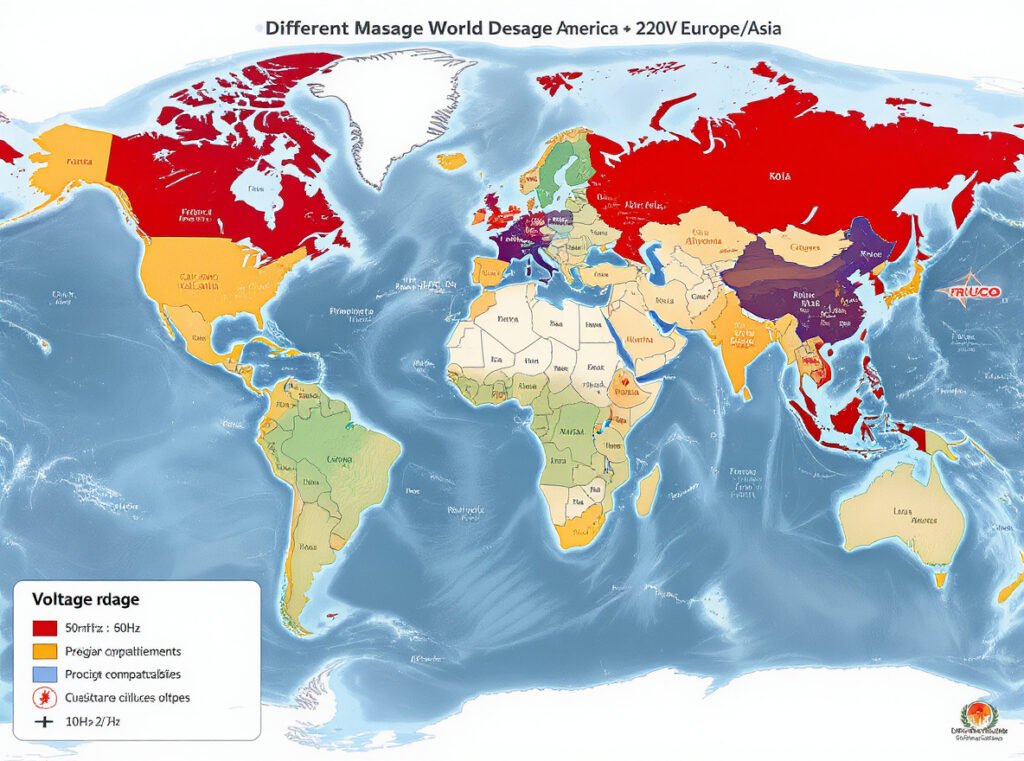
This global variation creates both engineering challenges and market opportunities for manufacturers offering comprehensive dual-voltage solutions.
Regional Electrical Specifications
North American systems typically operate at 120V/60Hz, while European systems use 230V/50Hz. However, actual voltages can vary significantly within acceptable ranges (±10% is common), requiring robust design margins.
Frequency Impact on Motor Performance
Motor-driven appliances must accommodate frequency variations that directly affect motor speed. A 60Hz motor running on 50Hz power operates at approximately 83% of designed speed, affecting airflow and performance unless specifically compensated.
Safety Standard Variations
International safety requirements mandate different design features and testing protocols, influencing component selection and manufacturing processes.
| Region | Voltage/Frequency | Safety Standards | Common Issues |
|---|---|---|---|
| North America | 120V/60Hz | UL, CSA, FCC | Motor speed optimization |
| Europe | 230V/50Hz | CE, IEC 60335-2-23 | Frequency compensation |
| Asia-Pacific | 100-240V/50-60Hz | Various national standards | Wide voltage tolerance |
| Global Models | 100-240V/50-60Hz | Multi-standard compliance | Complex certification |
Design Engineering Challenges
Creating truly universal dual-voltage hair dryers requires sophisticated engineering to handle extreme voltage ranges (100V Japan to 250V some European variations) while maintaining consistent performance and safety across all conditions.
Business Opportunities
Understanding these differences helps wholesalers identify market opportunities. Regions with frequent international business travel show higher demand for dual-voltage appliances, while price-sensitive markets may prefer simpler manual-switching models.
The complexity of global electrical standards underscores the value proposition of quality dual-voltage hair dryers that eliminate compatibility concerns for both consumers and businesses operating internationally.
What Are the Most Common Dual-Voltage Hair Dryer Problems?
Even quality dual-voltage hair dryers can experience issues, and understanding these problems helps retailers provide better customer support and make informed purchasing decisions.
The most common dual-voltage hair dryer problems include incorrect manual switch settings (causing 60% of failures), automatic detection malfunctions in unstable electrical conditions, heating element damage from voltage spikes, and motor performance inconsistencies between voltage modes. Regular filter cleaning and proper storage significantly reduce most operational issues.
User Error Categories
Manual switching models suffer from predictable user errors that account for the majority of warranty claims and customer complaints.
Common manual switch mistakes include forgetting to change voltage settings when traveling, attempting to operate the device while plugged in during switching, using incorrect tools that damage recessed switches, and misreading voltage markings or indicators.
Automatic System Failures
While more reliable than manual switches, automatic detection systems can experience specific failure modes:
• Sensor Degradation – Voltage sensing accuracy decreases over time or with electrical noise
• Microcontroller Glitches – Software bugs or hardware failures in control systems
• Relay Wear – Switching components deteriorate with repeated cycling
• Display Malfunctions – LED/LCD indicators fail while detection continues working
Environmental and Maintenance Issues
Hair dryers operate in challenging environments that accelerate wear and create performance problems:
Lint and Debris Accumulation
Blocked air filters reduce airflow and cause overheating, triggering thermal protection systems and reducing performance across all voltage modes.
Moisture Exposure
Bathroom humidity and accidental water exposure can cause electrical component corrosion, affecting voltage detection accuracy and safety systems.
Electrical Grid Problems
Unstable power supplies, voltage fluctuations, and electrical noise in some regions can confuse automatic detection systems or damage sensitive components.
Prevention strategies for businesses:
| Problem Category | Prevention Method | Implementation Cost | Business Benefit |
|---|---|---|---|
| User Error | Comprehensive instruction materials | Low | Reduced returns/support calls |
| Detection Failures | Quality component specification | Medium | Enhanced reliability reputation |
| Maintenance Issues | Customer education programs | Low | Extended product lifespan |
| Environmental Damage | Robust design requirements | Medium | Reduced warranty claims |
Troubleshooting Best Practices
Retailers should provide customers with basic troubleshooting guidance including voltage verification procedures, filter cleaning instructions, and proper storage recommendations to minimize support requirements and improve customer satisfaction.
Summary
Dual-voltage hair dryers solve international compatibility challenges through sophisticated switching technology that reconfigures internal heating elements between parallel and series connections. Manual models require user operation of physical switches, while automatic versions employ voltage sensors and microcontroller technology for seamless global operation. Understanding these technologies helps businesses select appropriate products and provide effective customer support.
Ready to explore professional dual-voltage hair dryers for your inventory? Browse our complete collection of international-compatible styling tools at conason.com/product/ or discover our P1C high-speed hair dryer with intelligent automatic voltage detection at this link. Contact us today for wholesale pricing, technical specifications, and market-specific certifications tailored to your business needs.