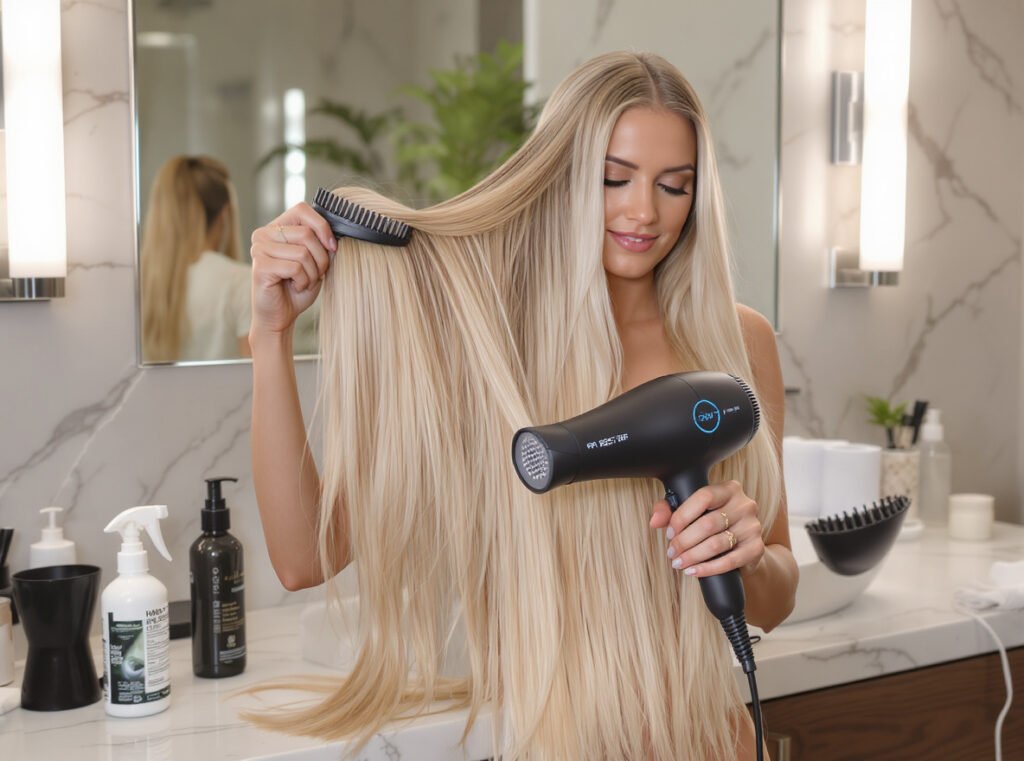
Hair extensions transform your look instantly, but improper drying techniques can damage these valuable investments and reduce their lifespan significantly. Many extension wearers unknowingly use excessive heat that leads to tangling, breakage, and dullness.
The best way to use a hair dryer on hair extensions is to use temperatures never exceeding 350°F (175°C), apply heat protectant spray beforehand, work in small sections from bottom to top, and use a concentrator nozzle attachment. Always partially air dry extensions first to minimize heat exposure time.
Let’s dive deeper into the professional techniques that will keep your extensions looking salon-fresh for months.
What Temperature Should You Use When Blow Drying Hair Extensions?
Understanding proper temperature control is crucial for extension longevity. Most people make the mistake of using high heat settings that can permanently damage synthetic fibers or strip moisture from human hair extensions.
Keep your hair dryer temperature never exceeding 350°F (175°C). Professional stylists recommend 250°F (120°C) as the optimal setting, as anything higher risks permanent damage to hair fibers and extension bonds.
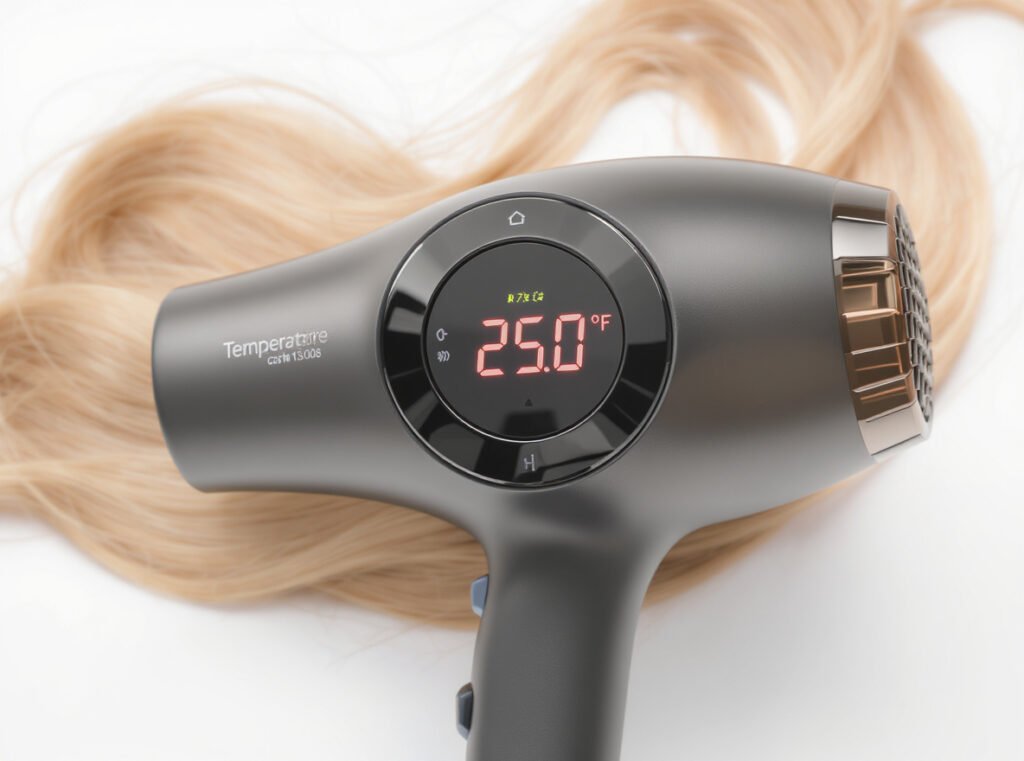
The science behind temperature control reveals why proper heat management is essential. Extensions lack the natural oils and proteins that protect your biological hair. When exposed to temperatures above 350°F, several damaging processes occur:
- Hair cuticles lift and crack permanently
- Protein denaturation occurs in human hair
- Color fading and brassiness develop rapidly
- Extension adhesives can weaken or fail
Professional temperature guidelines vary by extension type:
| Extension Type | Maximum Temperature | Professional Recommendation | Key Considerations |
|---|---|---|---|
| Human Hair Extensions | 350°F (175°C) | 250°F (120°C) | Can tolerate moderate heat with protection |
| Heat-Friendly Synthetic | 280°F (138°C) | 250°F (120°C) | Limited heat tolerance |
| Regular Synthetic | No Heat | Cool Air Only | Heat causes irreversible melting |
| Color-Treated Extensions | 300°F (149°C) | 230°F (110°C) | Extra caution needed for color preservation |
Modern high-speed hair dryers like the Conason P1C feature precise temperature control with multiple heat settings, making it easier to maintain safe temperatures while achieving professional results in less time.
Should You Air Dry or Blow Dry Hair Extensions?
This common dilemma depends on your extension type, time constraints, and styling goals. Professional stylists increasingly recommend a hybrid approach for optimal results.
Both air drying and controlled blow drying are effective methods. Air drying offers complete heat damage protection, while blow drying with proper technique provides faster results and styling versatility. The hybrid approach combines both benefits.
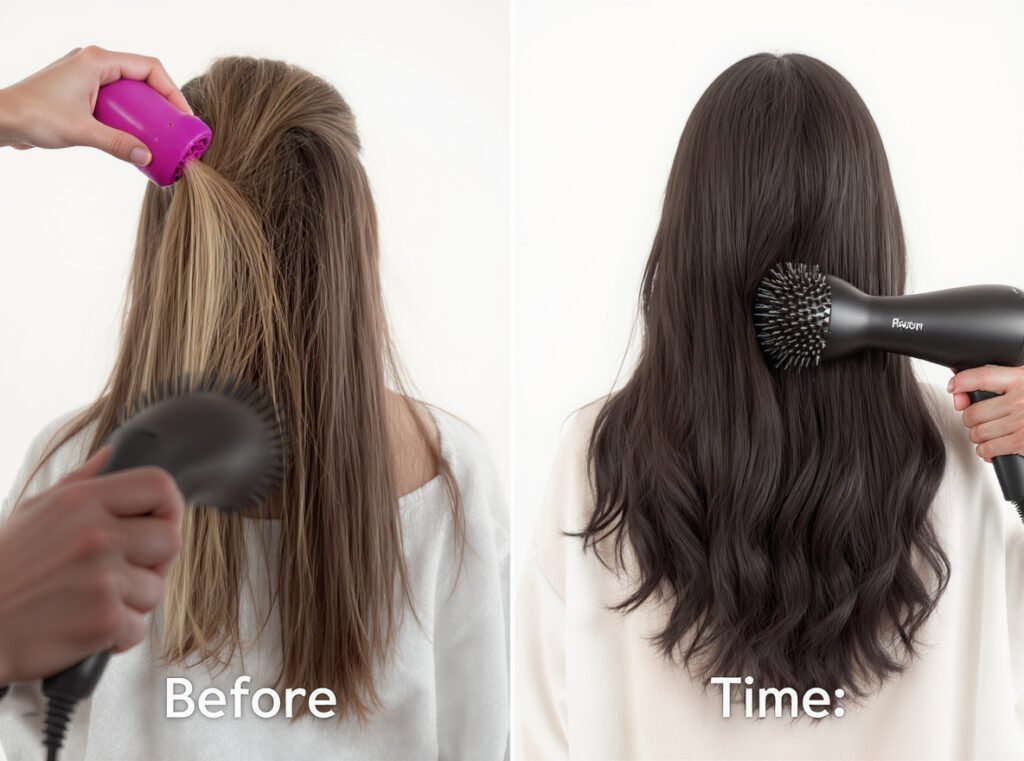
Air Drying Advantages
Air drying provides several protective benefits that extend extension lifespan:
- Zero heat damage risk
- Preserves natural texture and hair integrity
- Maintains optimal moisture balance
- Ideal for synthetic extensions that cannot tolerate heat
This method works particularly well for:
- Overnight styling routines
- Naturally wavy or curly extension textures
- Extensions recovering from previous heat damage
- Hot, humid climates where additional heat isn’t beneficial
Blow Drying Benefits
Professional blow drying offers practical advantages:
- Significantly reduces styling time (15-30 minutes vs several hours)
- Essential for bonded extensions to prevent adhesive weakening
- Allows precise volume and shape control
- Creates polished, salon-quality finishes
- Enables immediate styling after washing
The Professional Hybrid Approach
Industry experts recommend starting with 30 minutes of air drying, then finishing with low-heat blow drying. This technique:
- Reduces total heat exposure by 60-70%
- Ensures thorough drying around attachment points
- Maintains styling flexibility
- Minimizes damage risk while saving time
What Products Should You Use Before Blow Drying Extensions?
Preparation products create protective barriers and enhance final results. Using the right products is non-negotiable for extension care.
Always apply a high-quality heat protectant before blow drying extensions. Professional-grade heat protectants with 450°F protection are essential, along with leave-in conditioners and lightweight styling products applied to mid-lengths and ends.
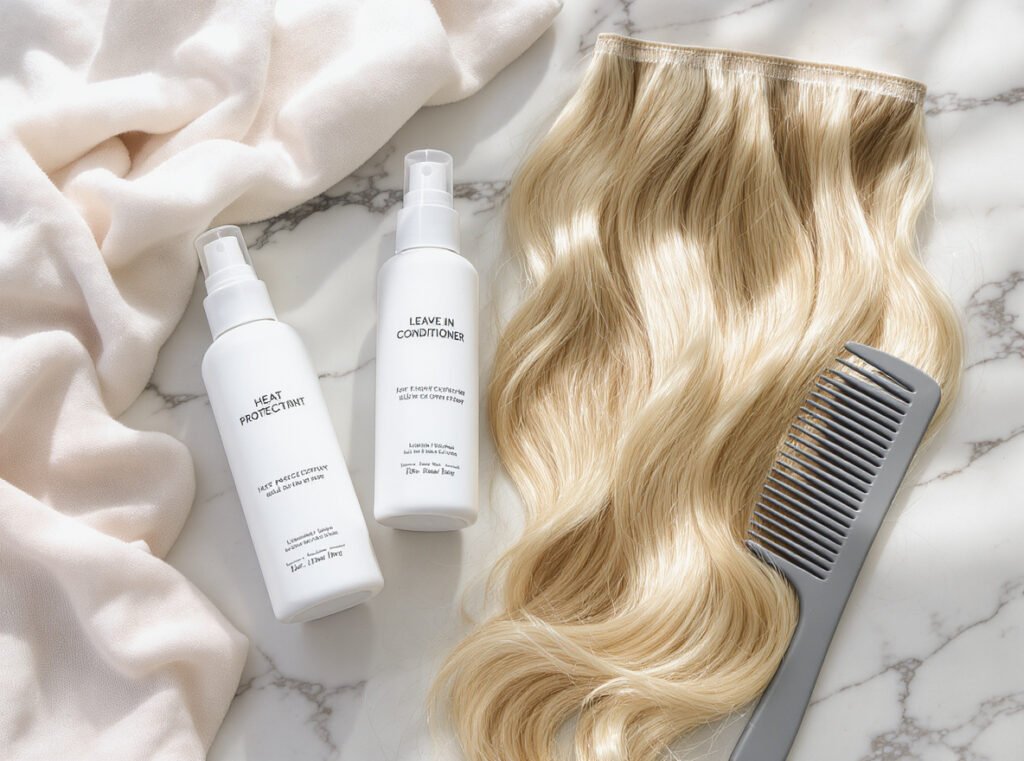
Professional Heat Protectant Recommendations
Top-rated products proven effective for extensions include:
- L’Oreal Color Vibrancy Dual Protect Spray: Best for color-treated extensions with 450°F protection
- Matrix Total Results Length Goals Perfector: Specifically designed for extensions in partnership with Bellami
- John Frieda Frizz Ease Heat Defeat: Excellent for frizz control and smoothing
- Not Your Mother’s Beat the Heat: Budget-friendly option with reliable 450°F protection
Step-by-Step Product Application
Professional preparation follows this systematic approach:
Step 1: Gentle Water Removal
Use a microfiber towel to squeeze (never rub) water from extensions. Traditional cotton towels create friction that roughens the hair cuticle and causes frizz.
Step 2: Detangling
Work through tangles with a wide-tooth comb, starting from ends and working upward to prevent stress on attachment points.
Step 3: Product Layering
Apply products in this specific order:
- Leave-in conditioner for moisture retention
- Heat protectant spray covering all strands evenly
- Lightweight styling cream for frizz control
- Optional root lift spray for volume (avoid attachment areas)
Critical Application Note: Focus products on mid-lengths and ends. Avoid applying directly to attachment points as this can weaken bonds in tape-in or bonded extensions.
How Do You Properly Section Hair Extensions for Drying?
Strategic sectioning ensures even heat distribution and prevents over-processing. Poor sectioning is one of the most common mistakes leading to uneven results and increased heat exposure.
Divide extensions into horizontal sections no wider than 2 inches, working from bottom to top. Start with the lowest extension row and work systematically upward, ensuring each section is 80% dry before moving to the next level.
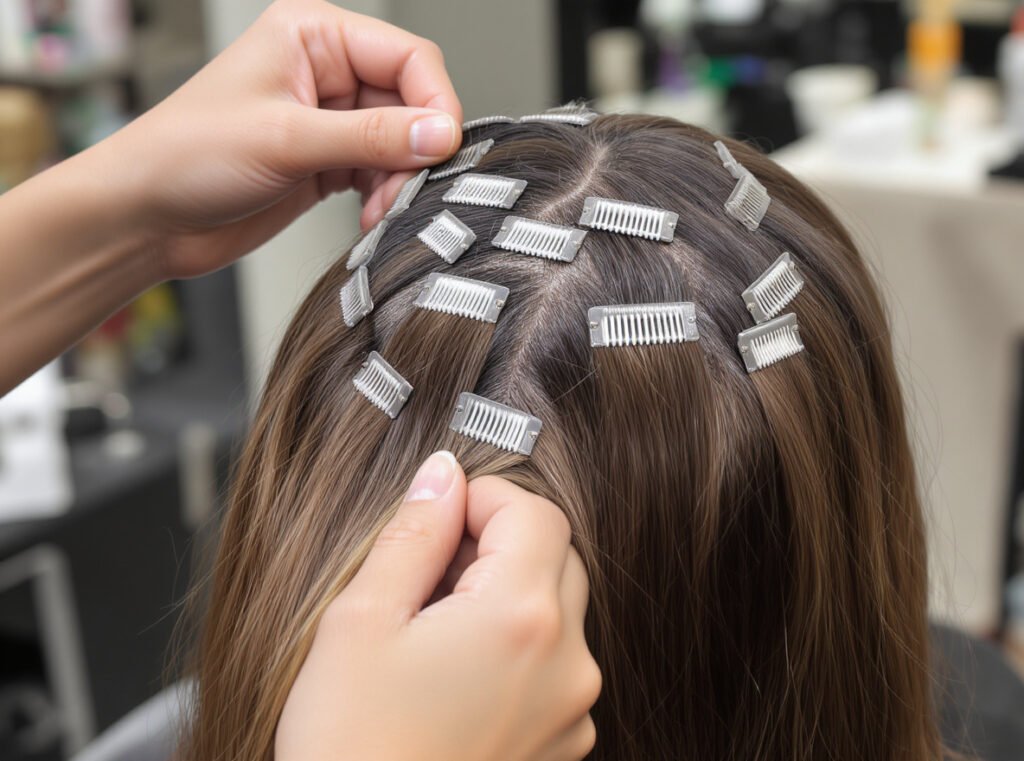
Professional Sectioning Technique
The foundation approach follows this systematic pattern:
Bottom-Up Method
Start sectioning from the lowest extension row, creating your foundation section approximately 2 inches wide. This becomes your base for systematic drying.
Clip Management
Use appropriate sectioning tools:
- Small clips for fine sections and detailed work
- Larger clips for thick hair and upper sections
- Metal clips preferred over plastic to prevent snagging
Extension-Specific Considerations
When working around extensions, professionals focus on:
- Identifying attachment points: Be aware of bond, tape, or clip locations
- Creating buffer zones: Section above and below attachment areas
- Avoiding direct heat on bonds: Maintain 6-8 inches distance from attachment points
The systematic approach prevents common sectioning mistakes:
- Missed wet sections requiring repeated heat exposure
- Uneven texture and finish quality
- Over-processing certain areas while others remain damp
- Tangling from inadequate hair separation
What Attachments and Tools Work Best with Extensions?
Professional-quality tools make the difference between amateur and salon-quality results. Generic attachments often lack the precision needed for extension care.
Always use a concentrator nozzle attachment when blow drying extensions to direct airflow precisely and reduce frizz. Combine this with appropriate round brush sizes and maintain 6-8 inches distance between the dryer and hair.
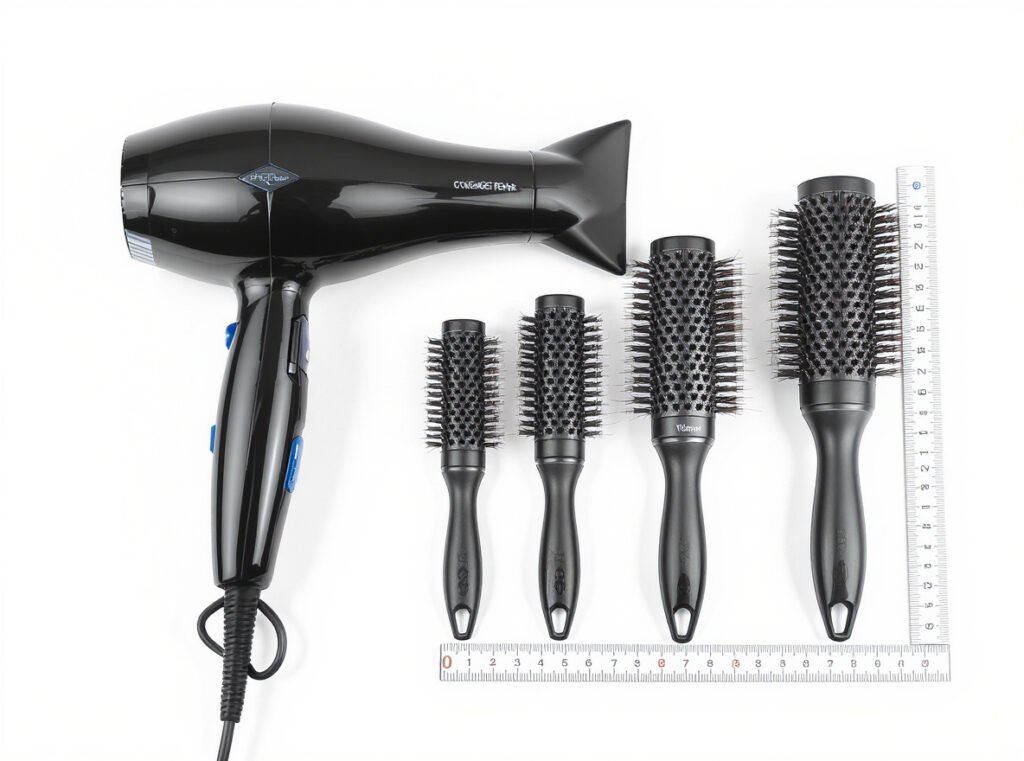
Essential Concentrator Nozzle Benefits
The concentrator attachment is non-negotiable for extension care:
- Focuses airflow into a controlled stream
- Reduces ambient heat dispersion
- Enables precise direction control
- Creates smoother cuticle laying
- Significantly reduces frizz formation
Professional Round Brush Selection
Choose brush size based on desired outcomes:
| Brush Size | Best Applications | Results Achieved |
|---|---|---|
| 33mm (1.3 inch) | Short extensions, volume creation | Tight curls, maximum lift |
| 43mm (1.7 inch) | Medium length, classic styling | Soft curls, balanced volume |
| 53mm (2.1 inch) | Long extensions, loose waves | Relaxed waves, natural movement |
| 65mm (2.6 inch) | Long extensions, straightening | Sleek finish, maximum smoothness |
Professional Technique Guidelines
Maintain these distances and movements:
- 6-8 inches distance between dryer and hair
- Steady, continuous motion to prevent hot spots
- Downward airflow direction following natural hair patterns
- Complete each section before moving to the next area
High-performance dryers like the Conason P1C feature ionic technology that seals hair cuticles while reducing drying time by up to 50%, making professional results more achievable at home.
How Do You Dry Different Types of Hair Extensions?
Extension material determines the appropriate drying approach. What works safely for human hair can permanently damage synthetic fibers, while techniques for synthetics may not optimize human hair results.
Human hair extensions tolerate moderate heat up to 350°F with proper protection, while synthetic extensions require cool settings exclusively. Heat-friendly synthetics fall between these extremes with specific temperature limitations of 280°F maximum.
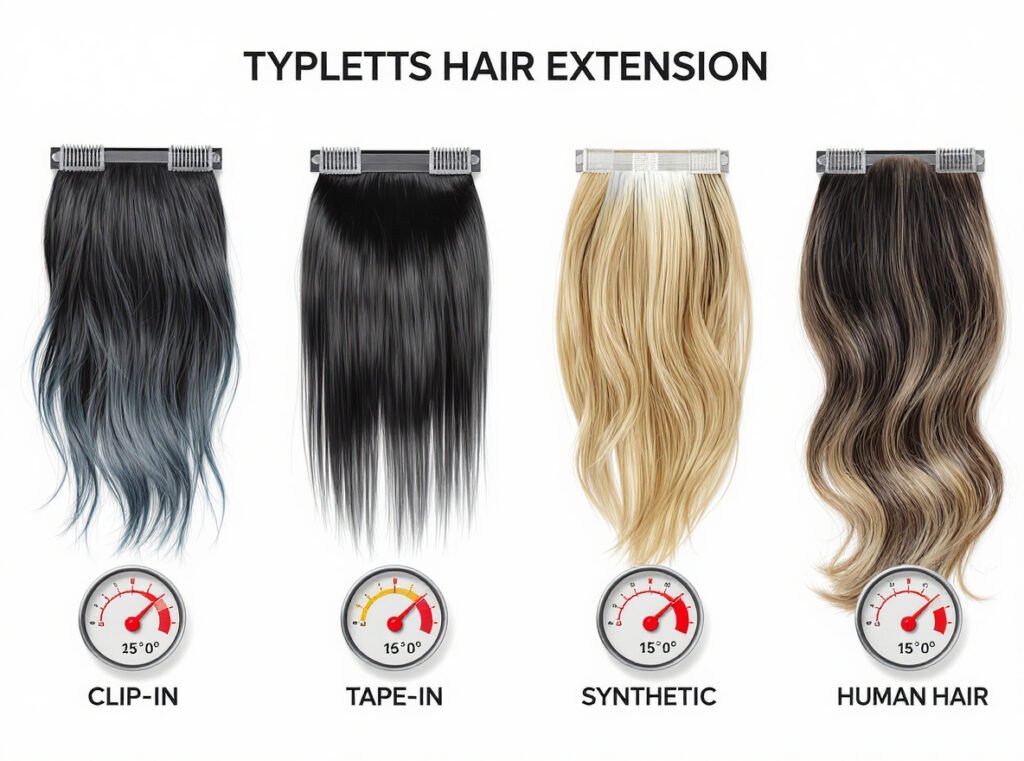
Human Hair Extensions
These premium extensions offer the most styling flexibility but require careful technique:
Professional approach includes:
- Start with 70% air-dried extensions
- Use lowest effective heat setting (ideally 250°F)
- Apply consistent downward motion to seal cuticles
- Focus drying from roots toward ends
- Finish with cool air to set the style
- Avoid concentrating heat on attachment points
Synthetic Extensions
Standard synthetic fibers cannot withstand any heat. The cooling approach focuses on:
- Cool air setting exclusively
- Gentle airflow to prevent tangling
- Wide-tooth combing during the process
- Primary reliance on air drying methods
- Complete avoidance of heated styling tools
Heat-Friendly Synthetic Extensions
These specialized fibers tolerate limited heat with strict parameters:
- Maximum temperature: 280°F (138°C)
- Short exposure periods only
- Cool air finish to prevent fiber memory loss
- Minimal brushing during the heating process
- Professional-grade heat protectant essential
Color-Treated Extensions
Extensions with chemical processing require extra precautions:
- Lower temperature settings (maximum 300°F)
- Enhanced heat protection products
- Shorter heat exposure periods
- Focus on color-preserving techniques
- Regular deep conditioning treatments
What Common Mistakes Should You Avoid?
Even experienced extension users make errors that compromise their investment. Professional stylists identify these critical mistakes that lead to premature extension failure.
The most damaging mistakes include using excessive heat above 350°F, skipping heat protectant application, poor sectioning technique, and rushing the drying process. These errors cause irreversible damage and costly premature replacement.
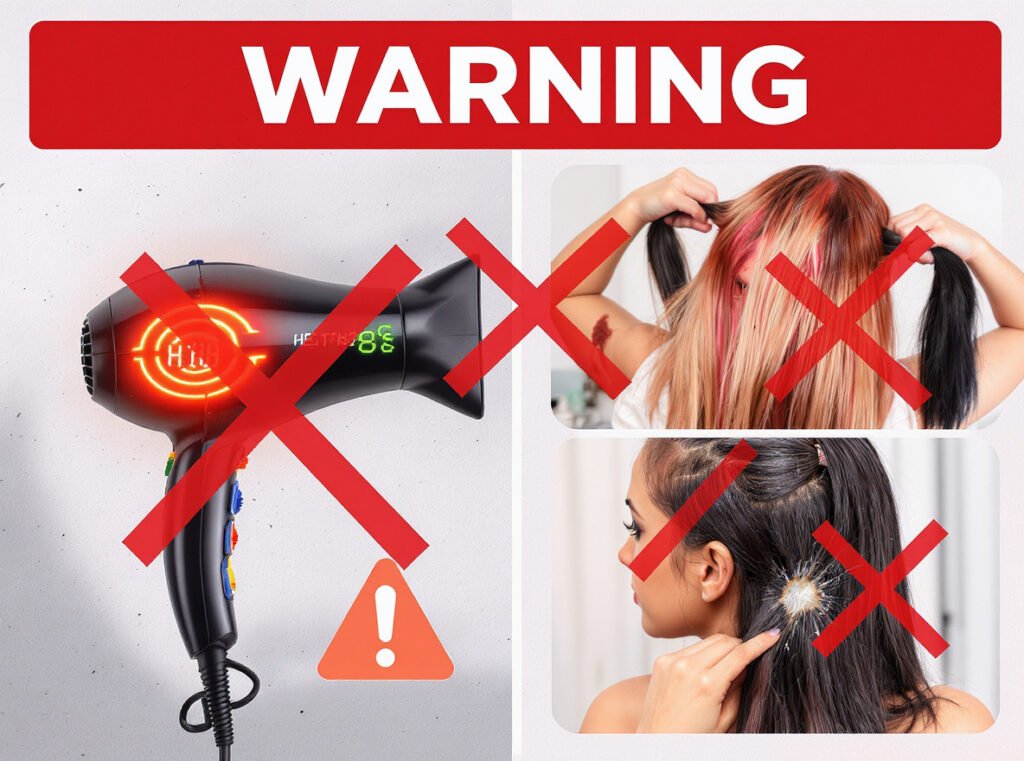
Critical Heat-Related Errors
Excessive temperature remains the leading cause of extension damage:
- Temperature abuse: Using settings above manufacturer recommendations
- Distance violations: Holding dryers too close (under 6 inches)
- Hot spot creation: Concentrating heat in single areas too long
- Cool-down skipping: Not using cool air to set styles
These create:
- Irreversible protein denaturation in human hair
- Melting and texture distortion in synthetic fibers
- Accelerated color fading and brassiness
- Increased porosity leading to faster damage accumulation
Mechanical Damage Mistakes
Improper handling during blow-drying causes:
- Aggressive brushing: Excessive force on wet, vulnerable hair
- Attachment point stress: Direct manipulation of bond areas
- Improper sectioning: Creating tension in wrong directions
- Rush handling: Moving too quickly through the process
Product Application Errors
Common product mistakes include:
- Heat protectant omission: Skipping this critical step entirely
- Wrong product selection: Using products with drying alcohols
- Over-application: Heavy oils preventing proper drying
- Bond contamination: Applying products to attachment areas
Professional Prevention Tip: When using round brushes, wrap hair around the brush and leave it there until completely cool, then carefully release. This sets the style without requiring additional heat exposure.
How Often Should You Blow Dry Hair Extensions?
Frequency directly impacts extension lifespan and overall investment return. Professional maintenance schedules balance cleanliness needs with preservation requirements.
Limit blow drying to 1-2 times per week maximum for optimal extension longevity. Between sessions, use dry shampoo, protective styling, and gentle refresh techniques to maintain appearance without additional heat exposure.
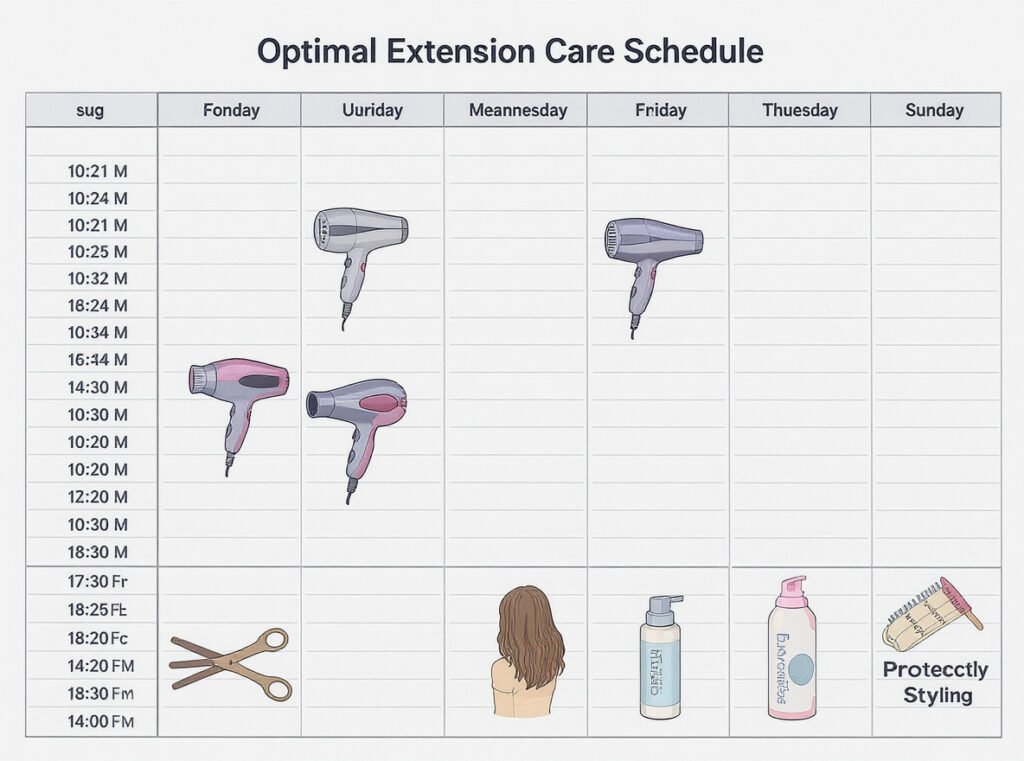
Professional Frequency Guidelines
Daily Wear Extensions (Clip-ins)
- Blow dry after each washing (typically 1-2 times per week)
- Use refresh sprays and dry shampoo between washes
- Rotate between multiple sets to reduce individual wear
- Remove before sleeping to prevent tangling damage
Semi-Permanent Extensions (Tape-ins, Sew-ins)
- Professional salon washing and styling every 6-8 weeks
- Minimal at-home heat styling between appointments
- Focus on scalp cleansing rather than full extension washing
- Use protective styles to extend time between heat sessions
Permanent Extensions (Fusion, Micro-links)
- Professional maintenance appointments every 8-12 weeks
- Gentle home care with heat-free styling when possible
- Investment protection through silk pillowcases and protective styles
- Regular deep conditioning treatments to maintain hair health
Seasonal Adjustments
Environmental factors affect optimal frequency:
- Summer: Reduced washing needs due to higher humidity
- Winter: Potential for more frequent conditioning due to indoor heating
- Activity level: More active lifestyles may require adjusted schedules
- Product usage: Heavy styling products increase washing frequency needs
Professional Maintenance Benefits
Regular salon visits every 4-6 weeks provide:
- Expert assessment of extension condition
- Professional deep conditioning treatments
- Proper bond maintenance and adjustment
- Styling that extends time between at-home sessions
Summary
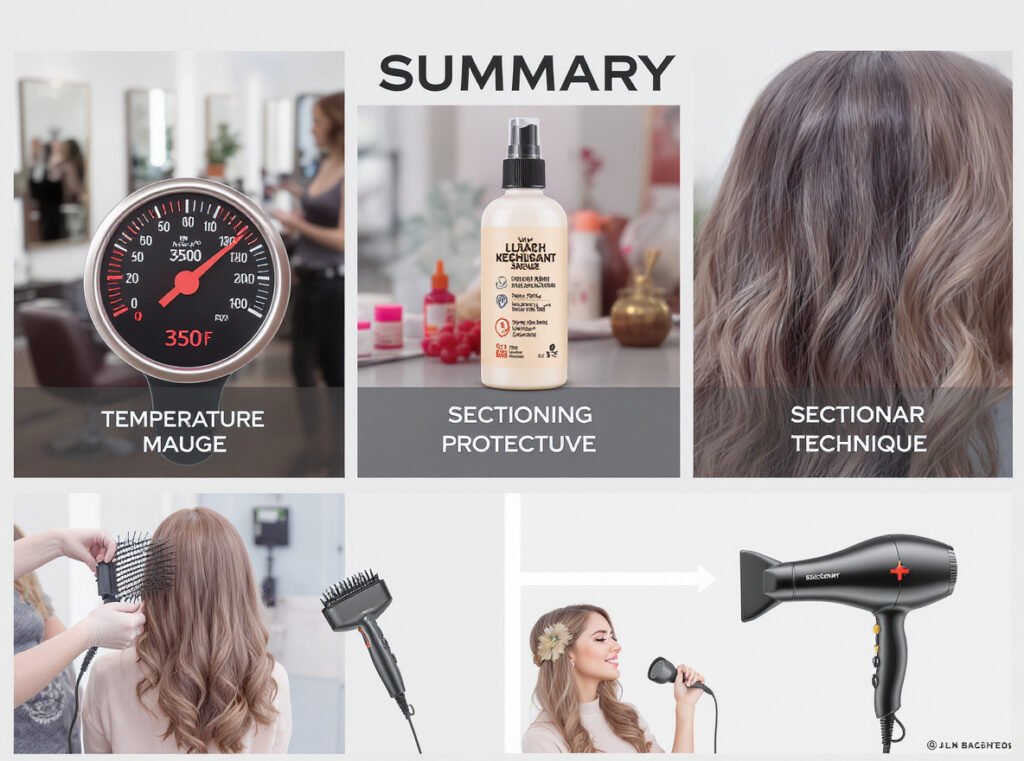
Successfully using a hair dryer on extensions requires precise temperature control (never exceeding 350°F), quality heat protectant products, systematic sectioning from bottom to top, and appropriate professional tools. The hybrid approach of partial air drying followed by low-heat finishing provides optimal results while preserving extension longevity and investment value.
Ready to achieve professional extension care results? Our Conason P1C high-speed dryer features precision temperature control, ionic technology, and concentrator attachments specifically designed for extension maintenance. Visit our complete product collection at conason.com/product/ to discover professional-grade tools that help your customers maintain their extension investments, or contact us for wholesale pricing on styling solutions that deliver salon-quality results.