Skip to content
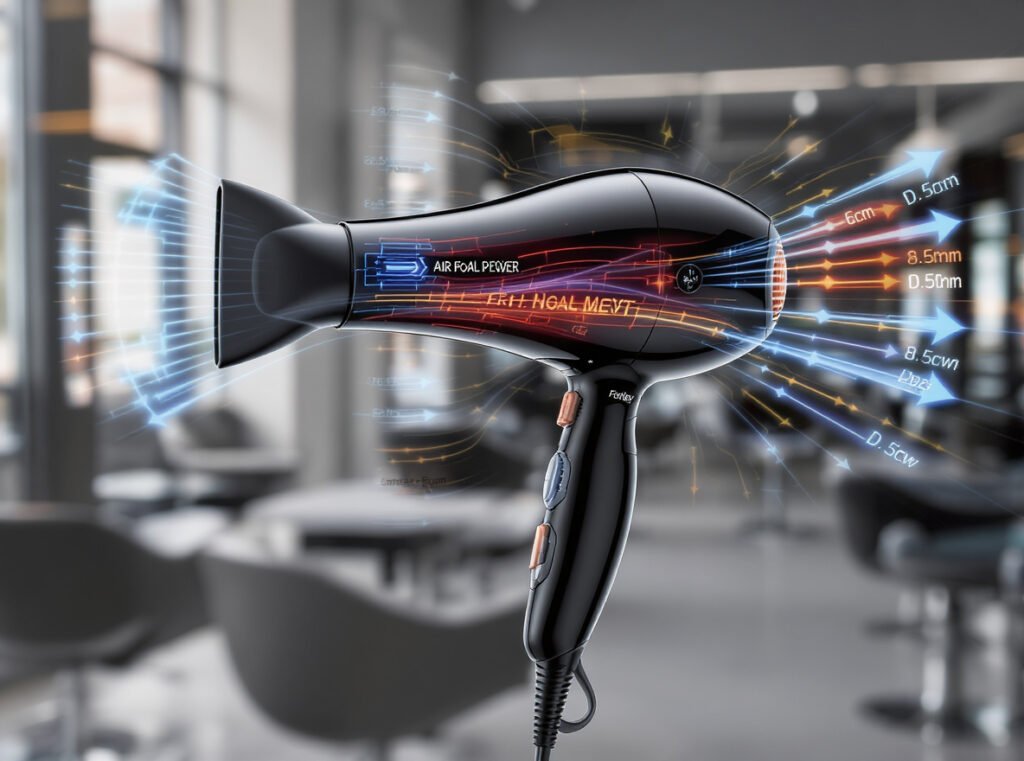
Your hair dryer seems to take forever, and you wonder if there’s something wrong with the nozzle. Different nozzle designs dramatically change airflow patterns, creating either concentrated streams for fast drying or dispersed air for gentle styling. The wrong nozzle choice costs you time and damages your hair.
Hair dryer nozzle design directly affects air pressure and drying speed through fluid dynamics principles. Concentrator nozzles increase air velocity by forcing airflow through narrower openings, creating focused streams that can reach 110-140 m/s compared to traditional 15-30 m/s designs. Diffuser nozzles reduce air pressure by expanding airflow across larger surface areas, providing gentler drying conditions that preserve natural hair texture while minimizing frizz.
Understanding these aerodynamic principles helps you choose optimal nozzles for different hair types and can guide wholesale purchasing decisions for maximum customer satisfaction.
How Do Concentrator Nozzles Maximize Air Pressure and Speed?
Professional stylists rely on concentrator nozzles for precision work and faster drying times.
Concentrator nozzles achieve maximum efficiency through the continuity equation – as cross-sectional area decreases, velocity must increase to maintain constant mass flow. Research shows that thinner nozzles result in significantly more forced air being pushed through smaller areas, with high-performance systems reaching velocities of 110-140 m/s compared to traditional designs at 15-30 m/s.
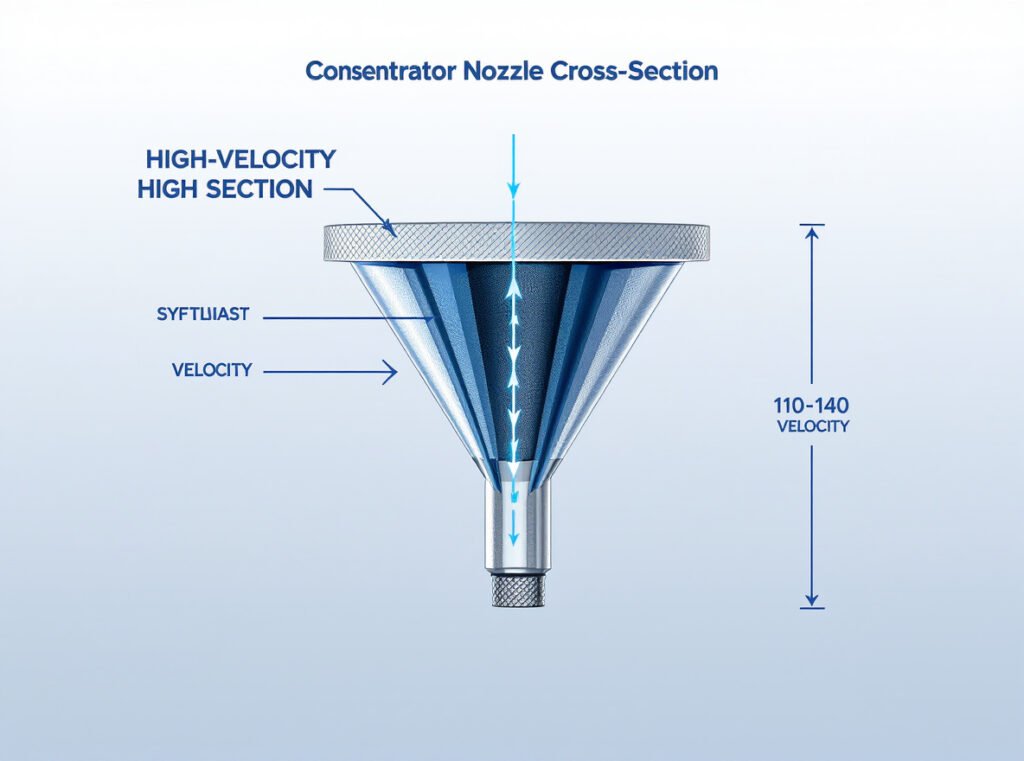
The physics behind concentrator performance involves several key mechanisms:
Velocity Amplification: When air passes through the narrow opening of a concentrator nozzle, velocity increases while pressure converts from static to dynamic pressure. This concentrated airflow creates the focused, high-energy airstream that enables faster drying and precision styling.
Choked Flow Conditions: In professional hair dryers, practical nozzle air pressures are high enough to produce “choked flow” at the narrowest part of the nozzle. This creates a sonic barrier when pressure difference exceeds about 1.9 atmospheres, limiting maximum velocity regardless of additional pressure increases.
Pressure Conversion: Following Bernoulli’s principle, as fluid velocity increases, static pressure decreases, but the dynamic pressure (kinetic energy) increases substantially. This dynamic pressure is what actually moves and dries hair effectively.
Performance benefits include:
• Targeted heat application: Precise airflow direction allows section-by-section styling
• Faster drying times: Concentrated airflow penetrates thick hair layers more effectively
• Reduced heat exposure: Higher air velocity means less time needed per section
• Professional control: Focused streams enable detailed styling work
| Velocity Range (m/s) | System Type | Drying Efficiency | Best Application |
|---|---|---|---|
| 110-140 | High-performance digital | Maximum | Professional styling |
| 80-110 | Advanced brushless | High | Thick, resistant hair |
| 30-80 | Standard AC motor | Moderate | General home use |
| 15-30 | Basic models | Basic | Light styling needs |
What Makes Diffuser Nozzles Reduce Air Pressure Effectively?
Curly and textured hair requires gentler airflow to prevent frizz and maintain natural patterns.
Diffuser nozzles operate on the opposite principle of concentrators, expanding airflow to reduce velocity and create gentler air pressure. The physics involves increasing the cross-sectional area through which air flows, which decreases velocity according to the continuity equation, removing velocity-generating constrictions and converting kinetic energy back into static pressure.

The diffuser design creates specific airflow characteristics:
Area Expansion: Diffusers feature much larger surface areas with multiple openings that disperse airflow evenly. This design removes velocity-generating constrictions, converting kinetic energy back into static pressure for gentler hair treatment.
Turbulence Reduction: The expanded flow area reduces turbulence and air velocity fluctuations. Research indicates that larger diameter nozzles create less turbulent intensity, with studies showing turbulence intensity dropping from 55.59% in narrow nozzles to 32.93% in wider designs.
Pressure Distribution: Unlike traditional concentrator nozzles, diffusers release air to float around curls rather than creating concentrated pressure points. This preserves natural hair texture while minimizing frizz through gentler air pressure application.
Key performance advantages:
Unlike traditional hair dryer nozzles, diffusers create broad, even airflow distribution that enhances natural texture while defining curls and waves. The multiple protrusions disperse airflow evenly to minimize frizz while adding volume at the roots.
• Reduced air velocity: 50-70% gentler than concentrator designs
• Even pressure distribution: Prevents hot spots that cause damage
• Curl preservation: Maintains natural hair patterns without disruption
• Volume enhancement: Lifts hair at roots while protecting texture
How Does Nozzle Diameter Impact Airflow Physics?
The mathematical relationship between nozzle diameter and airflow follows established fluid dynamics principles with measurable performance outcomes.
Nozzle diameter directly controls air velocity through fundamental physics, with research demonstrating that outer nozzle diameter significantly affects centerline airflow velocity. Studies show peak velocity increasing from 107.4 m/s with 2mm diameter to 153.4 m/s with 5mm diameter, representing a 46 m/s improvement through diameter optimization alone.
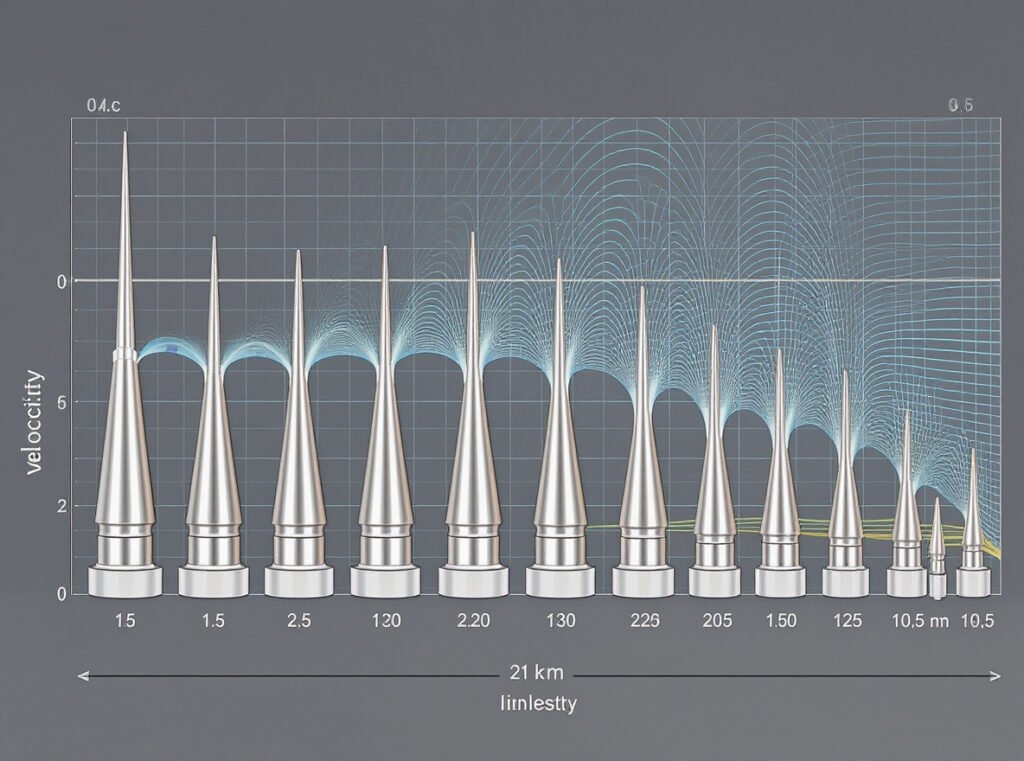
Understanding diameter effects on performance:
Mass Flow Relationship: The relationship between nozzle diameter and airflow follows complex fluid dynamics principles. Air velocity increases with the square root of nozzle diameter and pressure, but compressible flow effects create additional considerations for optimal performance.
Velocity Distribution: Air velocity varies across the nozzle cross-section, from maximum 340 m/s (speed of sound) at the center to zero at the nozzle wall. The average velocity of approximately 207 m/s reflects this variation and determines actual drying performance.
Vortex Control: Nozzle diameter affects vortex region formation in the airflow field. Smaller inner nozzle diameters create more turbulent airflow in vortex regions, increasing jet energy losses, while larger diameters reduce return velocity and turbulence impact.
Real-world diameter performance data:
| Diameter Range (mm) | Peak Velocity (m/s) | Turbulence Level | Optimal Use Case |
|---|---|---|---|
| 2-3 | 107-120 | High (55%) | Detail styling work |
| 4-5 | 130-153 | Moderate (45%) | General concentrating |
| 6-8 | 140-160 | Low (35%) | Thick hair drying |
| 15+ (diffuser) | 30-50 | Minimal (20%) | Curl enhancement |
The data shows that moderate increases in nozzle diameter can significantly improve peak velocity while reducing turbulence, creating more efficient airflow patterns for professional applications.
Why Does Nozzle Shape Control Drying Patterns?
Nozzle geometry creates distinct airflow patterns that directly affect drying results through controlled air distribution and heat transfer mechanisms.
Nozzle shape influences airflow patterns through geometric changes in the flow channel that directly affect stream velocity and flow rate. Convergent designs create focused airflow patterns ideal for sleek styling, while divergent patterns with multiple protrusions disperse airflow evenly to enhance natural texture and minimize frizz.
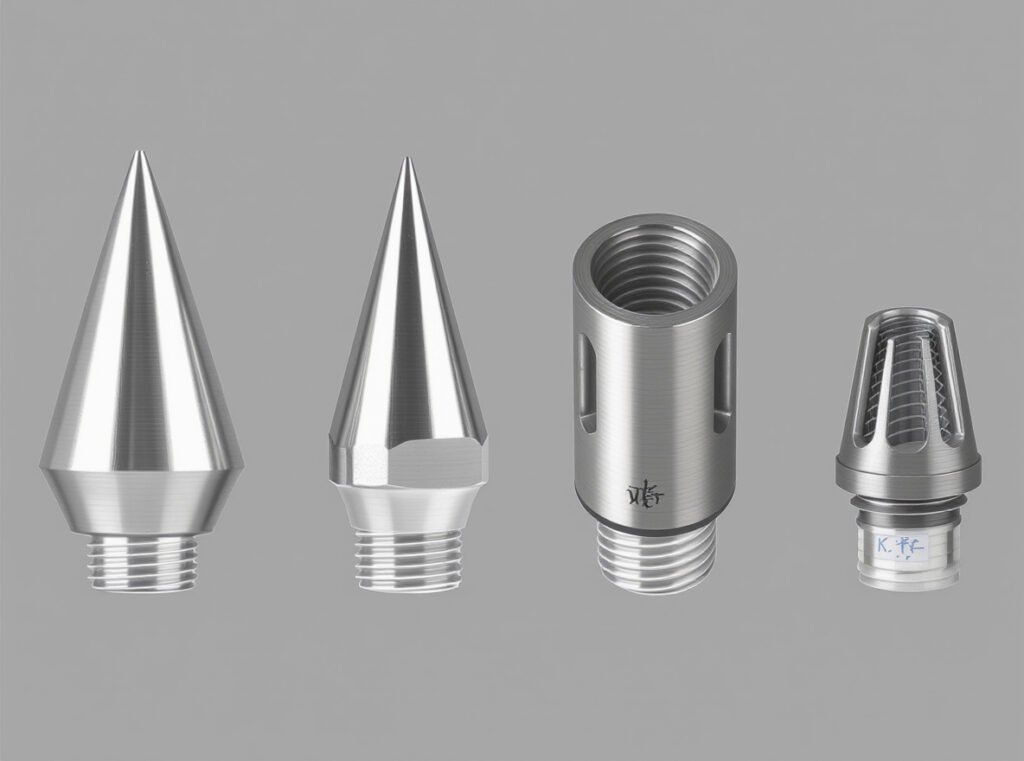
Shape-specific airflow effects include:
Convergent Design: Narrow, elongated concentrator shapes create focused airflow patterns ideal for sleek, straight styling. The geometric changes in the flow channel directly affect stream velocity and flow rate, with larger cross-sectional areas allowing more momentum gain.
Divergent Patterns: Round, flat diffuser shapes with multiple protrusions disperse airflow evenly to enhance natural texture. This broad, even airflow distribution minimizes frizz while defining curls and waves through controlled pressure reduction.
Flow Channel Optimization: The internal geometry determines whether airflow remains smooth (laminar) or becomes turbulent. Smooth transitions maintain energy efficiency, while controlled turbulence can improve heat mixing in specific applications.
Shape performance characteristics:
Styling nozzles provide precise airflow for detailed work, while smoothing attachments stretch textured hair through specialized airflow patterns. Wide nozzles expand airflow width for thick, long hair, while narrow nozzles provide concentrated force for resistant hair types.
• Conical concentrators: Maximum velocity with minimal energy loss
• Flat slot designs: Directional control for root lifting and sectioning
• Multi-port diffusers: Even distribution with natural texture preservation
• Curved profiles: Ergonomic positioning for comfortable use angles
The manufacturing precision of nozzle shapes directly impacts performance, with poor surface finish or irregular curves creating turbulence that reduces efficiency and increases noise levels.
Which Nozzle Materials Optimize Airflow Performance?
Advanced materials significantly impact thermal conductivity, airflow characteristics, and long-term durability in professional hair dryer applications.
Material selection affects both thermal performance and airflow optimization, with ceramic materials demonstrating thermal conductivity twice that of brass and superior heat transfer properties. Ceramic coatings provide anti-stick properties that reduce buildup and clogging risk while maintaining smooth airflow channels for optimal pressure distribution.
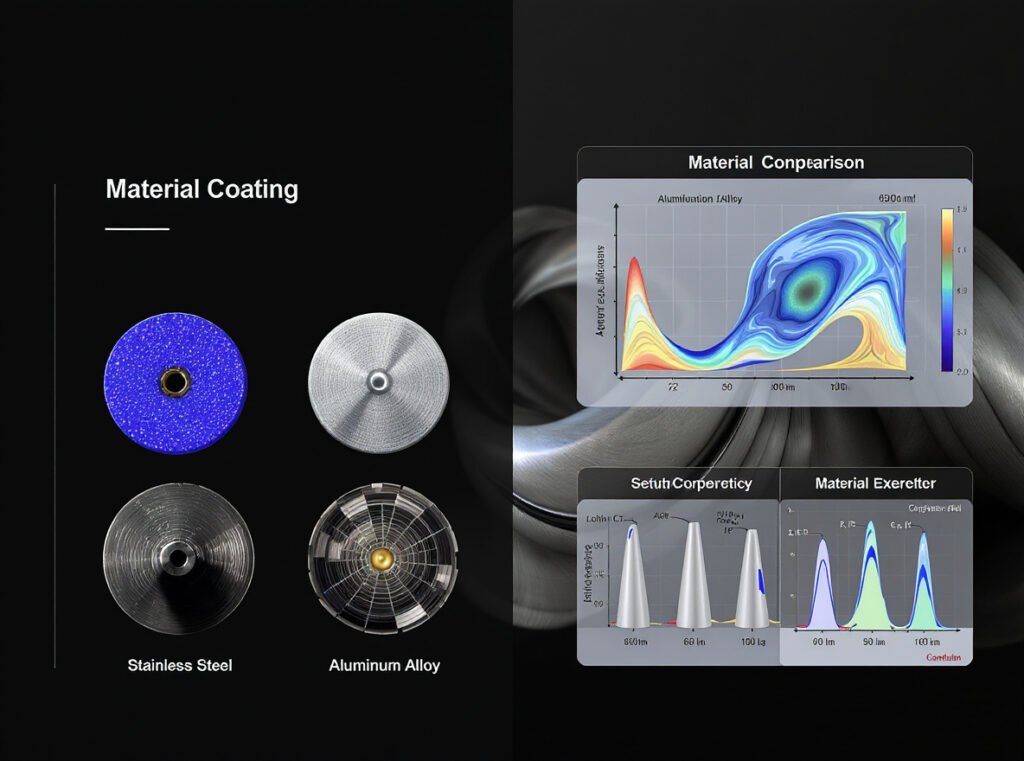
Material performance factors:
Thermal Conductivity: Ceramic materials, particularly chromium carbide surfaces, demonstrate superior thermal conductivity compared to traditional materials. This enhanced heat transfer improves nozzle efficiency even with thin coating layers, enabling better temperature distribution across the airflow stream.
Surface Properties: Ceramic coatings provide anti-stick properties that reduce buildup and clogging risk. The coating inside nozzles maintains smooth airflow channels, optimizing pressure distribution and preventing performance degradation over time.
Durability Considerations: Different materials offer varying corrosion resistance and temperature tolerance. Ceramic materials provide high corrosion and abrasion resistance for aggressive environments, while titanium offers excellent corrosion resistance in chemically aggressive conditions.
Material comparison for professional applications:
| Material Type | Thermal Conductivity | Surface Smoothness | Durability Rating | Professional Suitability |
|---|---|---|---|---|
| Ceramic Coating | Excellent (2x brass) | Superior | High | Ideal for frequent use |
| Stainless Steel | Good | Good | Excellent | Heavy-duty applications |
| Aluminum Alloy | Very Good | Excellent | Good | Lightweight efficiency |
| Heat-Resistant Plastic | Fair | Good | Moderate | Cost-effective solutions |
Professional-grade nozzles often feature polished or anodized finishes that reduce drag and allow higher airflow velocities, making material selection crucial for optimal performance.
How Do Multiple Nozzle Systems Enhance Professional Versatility?
Modern hair dryer systems incorporate multiple specialized attachments that optimize different styling needs through varied airflow control mechanisms.
Multiple nozzle systems provide enhanced versatility by offering specialized performance for different hair types and styling goals. Professional systems include styling nozzles for precise airflow, diffusers for curl definition, and smoothing attachments for stretching textured hair, allowing users to match airflow characteristics to specific requirements without changing tools.
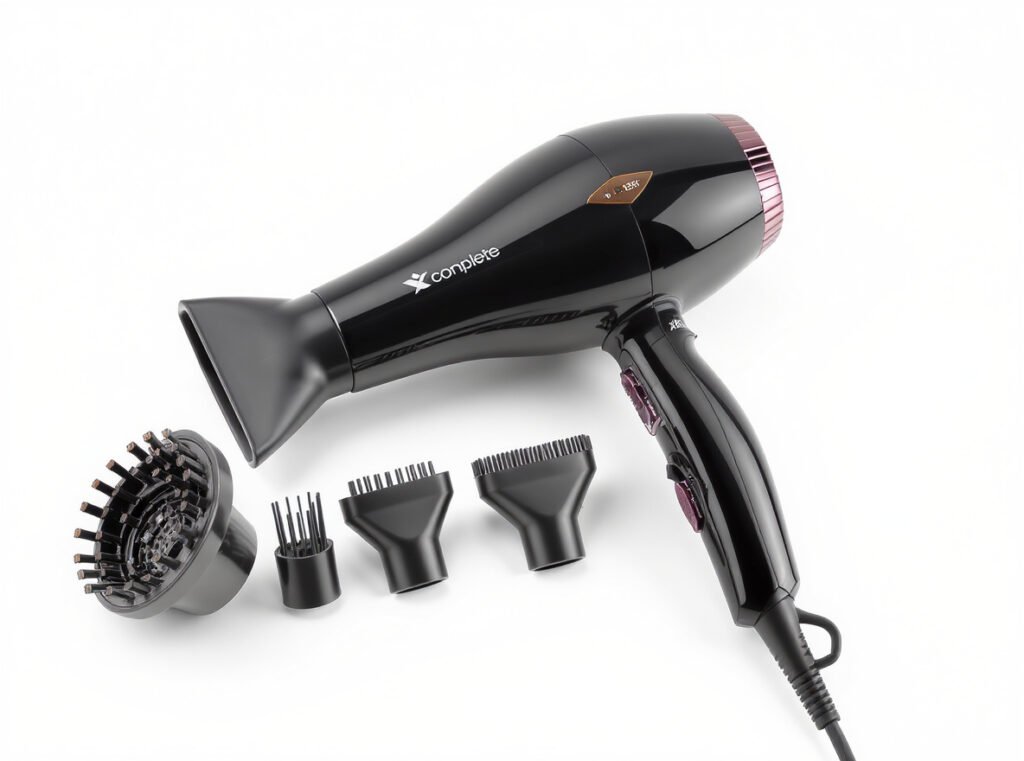
System design advantages:
Specialized Performance: Each nozzle attachment serves specific hair types and styling goals through optimized airflow patterns. Broad, extended nozzles dry thick hair faster, while narrow nozzles provide precision control for detailed styling work.
Adaptive Airflow: Multiple nozzle systems allow users to match airflow characteristics to specific requirements. Wide nozzles expand airflow width for thick, long hair, while narrow nozzles provide concentrated force for resistant hair types.
Quick-Change Mechanisms: Professional systems feature rapid attachment systems that enable seamless transitions during styling sessions. Magnetic attachments or bayonet-style connections provide secure mounting without complex threading or time-consuming adjustments.
Professional system benefits for wholesale applications:
Different nozzle configurations enable targeted drying strategies that reduce overall styling time while providing complete solutions for end customers without requiring additional purchases or compatibility research.
• Time efficiency: No tool changes required during complex styling procedures
• Client versatility: Appropriate airflow for each hair type and styling technique
• Investment protection: Expandable systems accommodate new styling trends
• Training consistency: Standardized controls across different nozzle types
For wholesale buyers, comprehensive nozzle systems provide complete customer solutions while ensuring compatibility and reducing support requirements.
What Role Does Motor Power Play in Nozzle Performance?
Motor specifications directly determine the maximum airflow capacity and pressure generation that different nozzle designs can effectively utilize.
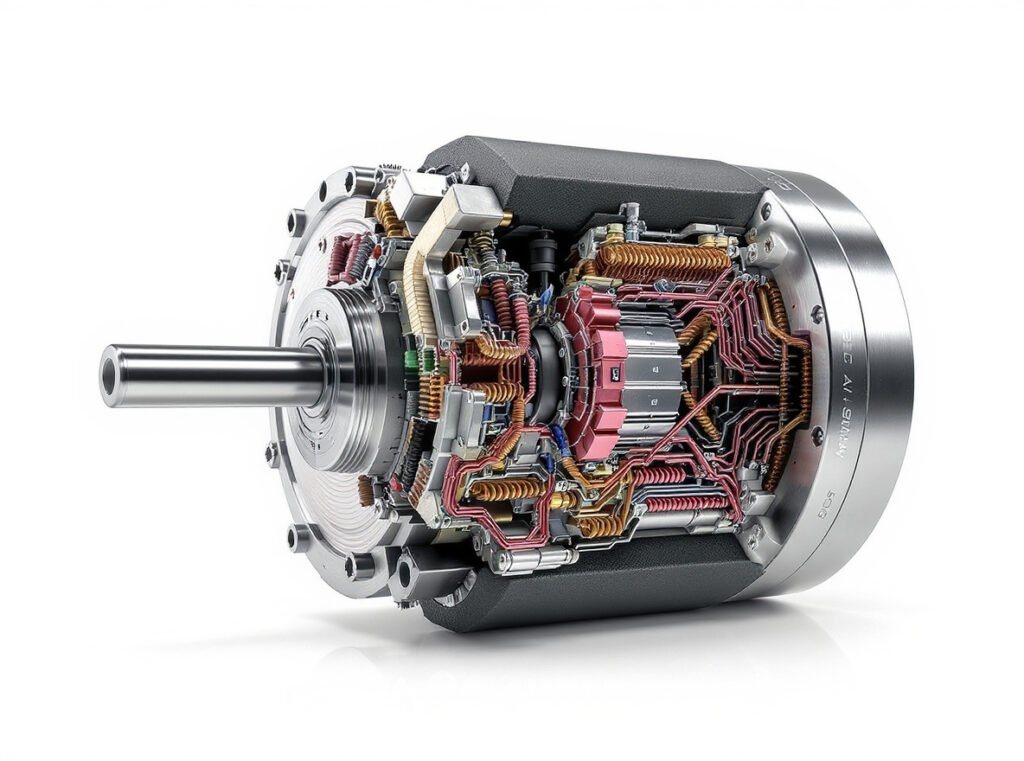
Motor power determines nozzle performance capabilities through velocity generation and pressure maintenance. High-performance systems feature digital brushless motors spinning at 110,000 RPM, enabling air velocities of 110-140 m/s through precisely engineered nozzles, representing an 80-85% improvement over traditional 15-25 m/s systems with standard AC motors.
Power-to-performance relationships:
Velocity Generation: Digital brushless motors provide the high rotational speeds necessary for maximum nozzle performance. At 110,000 RPM, these motors generate sufficient airflow volume and pressure to maintain optimal velocities even through restrictive concentrator designs.
Pressure Maintenance: Motor power determines the system’s ability to maintain adequate pressure at the nozzle despite friction losses through the airflow path. Insufficient motor power results in pressure drops that reduce nozzle effectiveness, while optimal power ensures consistent airflow regardless of nozzle resistance.
Mass Flow Control: At higher pressures, air becomes more compressed, increasing mass flow even at constant velocity. This means powerful motors enable “firing heavier air at constant velocity,” improving drying efficiency through increased momentum transfer to hair.
Motor specifications for different nozzle applications:
| Motor Type | RPM Range | Air Velocity (m/s) | Nozzle Compatibility | Performance Level |
|---|---|---|---|---|
| Digital Brushless | 110,000+ | 110-140 | All types optimal | Professional grade |
| Advanced Brushless | 80,000-100,000 | 80-110 | Most designs | High performance |
| Standard AC | 15,000-25,000 | 15-30 | Basic concentrators | Consumer grade |
| Universal Motor | 20,000-40,000 | 30-50 | Limited efficiency | Entry level |
For wholesale applications, motor-nozzle compatibility ensures customer satisfaction across diverse styling needs and prevents performance complaints that could damage brand reputation.
Summary
Nozzle design fundamentally transforms hair dryer performance through precise manipulation of fluid dynamics principles that control air pressure, velocity, and distribution patterns. Concentrator nozzles maximize drying speed through focused airflow reaching 110-140 m/s, while diffusers provide gentle treatment at 30-50 m/s for delicate hair types. Understanding these aerodynamic relationships enables optimal product selection for diverse customer needs and professional applications.
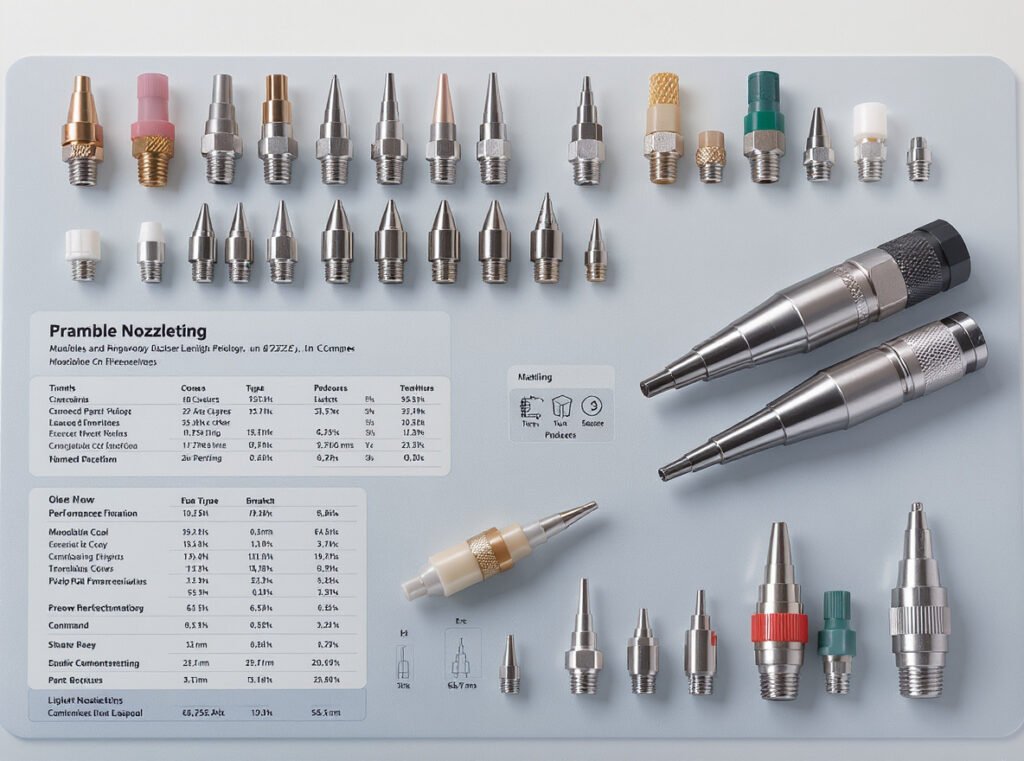
Ready to explore advanced nozzle technology? Discover our P1C high-speed hair dryer featuring multiple precision-engineered nozzles, or browse our complete professional collection for comprehensive hair styling solutions that deliver superior performance and customer satisfaction.